
Where Remote Talent Grows
HiRemoters is your hub for insights on remote work, hiring, and career growth.
Explore top articles and discover something new today.





Mobile App Developer Average Salary in the US
Considering a career as a mobile app developer or curious about how your current salary compares to others in the industry? Knowing the average salary for mobile app developers in the US can empower you to make informed career decisions and negotiate better compensation. This guide provides an easy-to-follow overview of mobile app developer salaries, including how factors like location, experience, and platform specialization can affect your earnings.What is the Average Mobile App Developer Salary in the US?Mobile app developer salaries in the US typically range from $75,000 to over $130,000 per year, with an average annual salary of around $102,000, according to industry reports. Your pay can vary significantly depending on your skill set, geographic location, and the sector you work in.Mobile App Developer Salaries by Experience LevelYour experience level significantly impacts your potential earnings as a mobile app developer:Entry-Level Mobile App DeveloperIf you're just starting your career (less than two years of experience), expect to earn approximately:$60,000 to $85,000 annually.Mid-Level Mobile App DeveloperDevelopers with 2-5 years of experience typically earn around:$85,000 to $110,000 annually.Senior-Level Mobile App DeveloperHighly experienced developers with over five years of experience can command salaries between:$110,000 and $150,000+ annually.Salaries Based on App Development PlatformsThe platform you specialize in also plays a crucial role in determining your salary:Android Developer Average SalaryAndroid developers usually earn:$95,000 to $125,000 per year.Particularly high demand exists in major tech hubs.iOS Developer Average SalaryiOS developers tend to earn slightly more, typically:$100,000 to $135,000 per year.Driven by the higher revenue potential associated with iOS apps.How Location Influences Mobile App Developer SalariesWhere you work dramatically influences your salary potential:CaliforniaIn tech-focused regions like Silicon Valley, developers can earn significantly higher salaries:$110,000 to $150,000+ annually.TexasTexas, particularly in growing tech cities like Austin and Dallas, offers competitive salaries ranging:$85,000 to $120,000 annually.Key Factors Influencing App Developer SalariesSeveral critical factors can affect your salary as a mobile app developer:1. Skill SetDevelopers proficient in multiple programming languages (Swift, Java, Kotlin, React Native) typically earn higher salaries.2. IndustryIndustries like finance, healthcare, and technology offer higher salaries due to their demand for secure and sophisticated apps.3. Education & CertificationsA bachelor’s degree is generally required, and certifications like Google's Android Developer Certification can enhance your earning potential.4. Company SizeLarger, established companies typically offer higher salaries compared to startups or smaller businesses.Practical Tips to Boost Your SalaryTo maximize your earnings potential, consider these practical steps:Gain specialized skills: Dive into emerging technologies like machine learning, AI, or cybersecurity.Earn relevant certifications: Enhance your resume with industry-recognized certifications.Relocate strategically: Consider moving to high-paying tech hubs such as San Francisco, Seattle, or New York.Network proactively: Engage in industry events, workshops, and online communities to discover better-paying opportunities.Comparing Salaries in Related Tech JobsComparing mobile app developer salaries to related tech positions can help contextualize your earnings:Web Developer: $70,000 - $100,000 annuallySoftware Developer: $85,000 - $120,000 annuallyUX/UI Designer: $75,000 - $110,000 annuallyMobile app developers typically earn higher salaries due to specialized skills and significant market demand.Future Job Outlook for Mobile App DevelopersThe job outlook for mobile app developers remains highly favorable, driven by growing reliance on mobile technology. Emerging trends such as AR, VR, IoT, and AI applications are creating robust opportunities for salary growth.Predicted Salary Trends:Continued salary increases due to sustained demand.Increased compensation for expertise in emerging technologies.Conclusion: Should You Pursue Mobile App Development?Given the appealing average salaries and strong demand, mobile app development is a promising career path. If you're passionate about technology and innovation, it’s definitely worth considering.We hope this guide has provided valuable insights. If you found this useful, please share your thoughts or experiences below and explore more of our content on app development careers and trends.
How to Hire Employees Without a Legal Entity
Hiring employees is a critical step for any growing business. But what if you don't yet have a legal entity established? Can you still hire staff without a registered company? The short answer is yes, and in this article, we'll explore how to hire employees without a legal entity efficiently and legally. Whether you're a startup founder, entrepreneur, or small business owner, understanding your options is essential to scaling your team while staying compliant.We'll cover practical approaches to hiring without a formal company, discuss key legal considerations, and introduce tools like Employer of Record (EOR) services that can help you onboard talent globally, without setting up a legal entity in every country.Why Hiring Without a Legal Entity MattersMany entrepreneurs start with an idea but don’t immediately establish a legal company. However, the need to bring in employees can arise early to accelerate growth. Hiring employees without a legal entity is a common challenge faced by startups and businesses expanding internationally.Common reasons businesses hire without a legal entity:Testing new markets before incorporationOperating in multiple countries without complex registrationsReducing initial setup costs and administrative burdensQuickly scaling teams during early-stage growthUnderstanding your hiring options helps avoid risks such as non-compliance with labor laws, tax penalties, and poor employee experience.Legal Challenges of Hiring Without a Legal EntityBefore diving into methods, it’s important to know the legal challenges when you hire employees without a registered company:Employment contracts: Without a legal entity, you cannot issue official employment contracts under local labor laws.Payroll and taxes: You must ensure proper salary payments, social security contributions, and tax withholdings according to local regulations.Work permits and visas: Hiring foreign employees may require compliance with immigration laws.Compliance risks: Non-compliance can lead to fines, legal disputes, and reputational damage.Key takeaway: While it’s possible to hire without a legal entity, the process must be managed carefully to stay compliant.How to Hire Employees Without a Legal Entity: Top MethodsHere are the most effective ways to hire employees without having a legal entity:1. Use an Employer of Record (EOR) ServiceAn Employer of Record is a third-party organization that acts as the official employer for your hires. They handle payroll, taxes, compliance, and contracts, allowing you to onboard employees anywhere in the world without establishing your own legal entity.Benefits of using an EOR:Full legal compliance with local labor lawsQuick onboarding processPayroll management and tax withholdingBenefits administration and HR supportThis is the most popular method for startups and businesses expanding internationally without local entities.2. Hire Freelancers or ContractorsAnother option is to hire freelancers or independent contractors. This can be done without a legal entity since you are not technically employing staff but engaging external professionals.Things to consider:Contractors manage their own taxes and benefitsClear contracts outlining scope, payment, and terms are necessaryNot suitable for roles requiring full-time employment or company controlWhile simpler, this method has limitations if you need long-term employees or want more control over their work.3. Partner With Local Staffing AgenciesYou can engage staffing or recruitment agencies in the target country. These agencies employ the workers and lease them to you.Pros:Agencies handle compliance, payroll, and taxesYou get staff quickly with minimal setupCons:Usually more expensive due to agency feesLess direct control over employeesThis method is common for temporary or project-based staffing needs.4. Set Up a Local Branch or SubsidiaryThough this involves creating a legal entity, some businesses choose to establish a branch or subsidiary to hire employees locally when scaling long-term.This is more complex and costly but provides full control and legal standing in the market.What You Need to Know About Contracts and PayrollWhether using an EOR or other methods, the following elements are critical:Employment ContractsMust comply with local labor lawsClearly state job duties, salary, benefits, termination termsProvided in the local language and/or EnglishPayroll and Tax ComplianceProperly calculate and withhold income taxManage social security and mandatory contributionsProvide payslips and maintain payroll recordsEOR providers typically handle all payroll and contract compliance on your behalf.Key Benefits of Hiring Employees Without a Legal EntityFaster market entry: Start hiring quickly without waiting for company registration.Cost savings: Avoid legal fees and administrative overhead.Flexibility: Scale up or down easily without entity restructuring.Risk reduction: Outsource compliance responsibilities to experts.Common FAQs on Hiring Without a Legal EntityQ1: Is it legal to hire employees without a legal entity? Yes, but it depends on your approach. Using an EOR or contractors is legal, while directly hiring employees without entity registration may violate laws.Q2: Can I pay employees directly without a company? It’s risky. Payroll and tax obligations must be fulfilled, which can be complex without a legal entity or EOR.Q3: How long does it take to onboard employees via an EOR? Typically, 1 to 2 weeks, much faster than registering a legal entity.Conclusion: Choose the Right Path to Hire Employees Without a Legal EntityHiring employees without a legal entity is achievable by leveraging smart strategies such as partnering with an Employer of Record, engaging freelancers, or using staffing agencies. These methods enable startups and businesses to grow their teams globally without the complexities of entity formation.If you want to hire employees quickly and legally without a registered company, an EOR is often the best solution, offering compliance, payroll management, and peace of mind.
AI Talent Matching Platform benefits
Finding the perfect hire can feel overwhelming, time-consuming, and sometimes frustrating. Luckily, technology has stepped in to simplify the process. AI talent matching platforms are transforming the hiring landscape, making it easier and faster than ever to find qualified candidates. If your company still relies on outdated manual methods or you're struggling to match job openings with the right talent, adopting an AI recruiting platform could dramatically improve your hiring process.In this article, we’ll break down the top advantages of AI talent matching platforms. You'll discover how AI can speed up your hiring, reduce costs, promote diversity, and offer your candidates a better recruitment experience overall.Faster Recruitment Process with AI Talent Matching PlatformsSave Time by Automating Candidate MatchingTraditional hiring can be painfully slow. AI talent matching platforms eliminate the manual work by quickly identifying candidates that match your requirements.Instead of spending hours or days reviewing resumes, AI algorithms instantly sift through large candidate pools and pinpoint the best matches.Benefits of using AI for faster recruitment include:Dramatically reducing candidate screening time.Quickly identifying the most qualified candidates.Accelerating your overall recruitment timeline.Improved Accuracy and Quality of Talent SelectionAI Recruiting Platforms Make Smarter Hiring DecisionsMistakes in hiring cost businesses significant time and money. AI recruiting platforms can dramatically increase accuracy by using precise, objective data rather than human guesswork.AI platforms analyze resumes, skills, qualifications, and past experiences objectively, significantly reducing the risk of hiring mismatches.Practical ways AI improves hiring accuracy:Automatically filters resumes based on skills and qualifications.Identifies hidden talent you might overlook manually.Reduces hiring errors, leading to better long-term employee performance.Increased Diversity Through AI RecruitmentPromote Fairness with AI-powered Unbiased HiringCompanies committed to diversity and inclusion find a powerful ally in AI recruiting technology.AI talent matching platforms remove unconscious biases by focusing purely on skills and qualifications. Platforms can anonymize candidate information like names and demographics to ensure a fair evaluation process.How AI supports diversity and inclusion:Promotes fair and equal opportunity hiring.Helps create a more inclusive workplace culture.Eliminates biases linked to gender, age, ethnicity, and more.Cost Savings with AI Talent Matching PlatformsReduce Hiring Expenses with AIRecruiting can be expensive. AI talent matching platforms reduce overall recruitment costs by automating tasks that usually demand significant resources.By cutting down manual screening efforts and reducing reliance on external agencies, your company saves considerable money.How AI saves recruitment costs:Minimizes administrative overhead.Cuts expenses related to recruitment agencies.Decreases costs from hiring mismatches.Higher ROI from AI Recruitment SolutionsAI-driven hiring solutions don't just lower costs—they also boost your company's return on investment (ROI).Hiring better candidates faster means quicker onboarding and increased productivity. Companies see immediate and long-term returns by using AI recruiting platforms.Practical ROI benefits of AI recruitment:Accelerated productivity from new hires.Reduced employee turnover rates.Improved overall business performance.Better Candidate Experience Through AI Recruitment TechnologyPersonalized Recruitment JourneyCandidates appreciate recruitment processes that feel tailored to their skills and interests.AI platforms offer personalized job recommendations, automated communication, and a smoother overall application process, greatly enhancing candidate satisfaction.AI-enhanced candidate experience includes:Tailored job recommendations.Personalized communication based on candidate preferences.Increased satisfaction and positive employer branding.Increased Transparency and CommunicationClear and consistent communication with candidates is essential. AI recruiting platforms offer transparency by providing automated, real-time updates and information.Applicants no longer wait anxiously for updates. Automated systems inform them clearly at every stage, significantly enhancing their experience.Benefits of transparent AI-powered communication:Instant application status updates.Faster responses to common candidate questions.Higher candidate trust and reduced frustration.Scalability and Continuous Improvement with AI PlatformsEasily Scale Your Recruitment EffortsGrowing companies need recruitment strategies that scale quickly. AI recruitment solutions effortlessly adjust to your hiring volume.Whether you’re hiring ten people or a hundred, AI platforms easily handle increased workload without extra staff or resources.Benefits of scalable AI recruitment:Flexibly adjusts to hiring volumes.Reduces the need for additional staffing.Maintains accuracy regardless of workload.AI Platforms Adapt and Improve Over TimeAI recruitment systems continuously learn from each hiring cycle, adapting to new trends and improving their effectiveness.This means your recruitment process becomes smarter and more efficient the longer you use the platform.Examples of continuous AI improvement include:Improved candidate matching from past hiring data.Regular adjustments based on market hiring trends.Constant refinement leading to better hires.Data-Driven Insights for Strategic Decision MakingPowerful Recruitment AnalyticsAI recruiting platforms provide valuable insights that help you improve recruitment strategies and decisions.Data-driven insights enable you to pinpoint inefficiencies, identify best-performing recruitment channels, and optimize your overall hiring strategy.Examples of insights provided by AI analytics:Tracking recruitment process efficiency.Identifying effective recruitment channels.Forecasting future hiring needs.Strategic Workforce Planning with AIAI platforms support strategic workforce planning, enabling proactive rather than reactive hiring decisions.Your business can forecast future needs, align recruitment goals with growth strategies, and avoid talent gaps before they occur.Strategic planning benefits include:Proactively addressing hiring demands.Avoiding staffing shortages.Aligning recruitment with company goals.Ready to Upgrade Your Recruitment with AI?AI talent matching platforms deliver powerful advantages—faster hiring, improved accuracy, diversity, cost savings, better candidate experiences, and strategic insights. If your goal is to simplify and elevate your recruitment process, integrating AI recruiting technology could be your next best step.
How to Manage Remote Employees in Different Countries
Managing remote employees spread across various countries is no longer a rarity—it’s becoming the norm for businesses embracing a global workforce. However, managing remote teams in different time zones, with diverse cultural backgrounds and varying legal requirements, can be a bit challenging. In this article, we’ll explore the best strategies for effectively managing remote employees in different countries, ensuring productivity, engagement, and clear communication.What Are the Key Challenges of Managing Remote Employees Across Different Countries?Managing a global team comes with its own unique set of challenges. Remote work, in general, offers flexibility, but when employees are located in different countries, several factors need to be considered to ensure success.Key Challenges:Cultural Differences: Employees from different countries bring varied work ethics, communication styles, and expectations.Time Zone Differences: Coordinating meetings and collaboration across time zones can be a logistical nightmare.Legal and Tax Compliance: Different countries have different labor laws and tax regulations that you need to follow to avoid legal complications.Communication Barriers: Language and communication styles can differ significantly, which can create misunderstandings.While these challenges may seem daunting, with the right approach, they can be overcome.Effective Strategies for Managing Remote Teams in Different Countries1. Set Clear Communication GuidelinesCommunication is the cornerstone of managing remote teams, especially when employees are based in different countries. Clear and consistent communication guidelines help bridge any gaps that might exist due to geographical and cultural differences.Key Tips:Use Multiple Channels: Rely on a combination of email, video calls, instant messaging, and project management tools like Slack, Microsoft Teams, or Trello.Regular Check-ins: Schedule regular one-on-one and team meetings, considering time zone differences.Set Expectations on Response Times: Establish a policy for how quickly employees should respond to emails or messages, taking into account time zones.Document Everything: Since remote employees can’t rely on face-to-face conversations, ensure that key information is documented in shared files for future reference.2. Leverage Technology for CollaborationCollaborative tools are indispensable when managing remote employees in different countries. Investing in reliable software will allow you to keep your team connected, improve project management, and streamline workflows.Top Tools to Consider:Project Management Software: Tools like Asana, Monday.com, or Jira help you assign tasks, set deadlines, and track progress, making it easier to manage teams in different countries.Time Zone Converters: Use tools like World Time Buddy to help schedule meetings at mutually convenient times.Cloud-Based File Sharing: Google Drive or Dropbox ensures that all team members, regardless of location, have access to the same files and documents in real-time.3. Be Mindful of Time ZonesTime zones are one of the most challenging aspects of managing remote employees across different countries. However, with careful planning, you can ensure that collaboration remains seamless.Practical Solutions:Use Scheduling Tools: Tools like Doodle or Calendly allow team members to book time slots based on their availability, making scheduling easier.Rotate Meeting Times: If your team is spread across multiple time zones, rotate the meeting times to ensure that no one team member is always inconvenienced by odd hours.Set Core Working Hours: Establish a set of overlapping working hours where all team members are available for meetings or collaboration, regardless of their time zone.4. Foster a Strong Company CultureMaintaining a strong company culture is essential when managing remote teams in different countries. A healthy, inclusive company culture promotes collaboration and makes employees feel valued, regardless of where they are located.Steps to Build a Remote-Friendly Culture:Host Virtual Social Events: Virtual team-building activities such as online games, happy hours, or coffee breaks can help remote employees bond.Encourage Knowledge Sharing: Create forums or platforms where employees can share experiences, insights, and tips. It can be as simple as a dedicated Slack channel for non-work-related discussions.Show Appreciation: Regularly acknowledge the hard work and achievements of remote employees. A small gesture like sending a thank-you note or a gift can go a long way in boosting morale.5. Provide Flexibility and AutonomyOne of the most appealing aspects of remote work is flexibility. However, managing a remote workforce in different countries means that you need to give employees the freedom to work when and how they are most productive.Why It Works:Focus on Output: Instead of micromanaging, focus on the results employees deliver, not necessarily the hours they work. Trust your team to manage their time efficiently.Adapt to Local Holidays and Work-Life Balance: Be mindful of national holidays and cultural observances in different countries. This flexibility shows that you value your employees' personal time, which is essential for maintaining a happy and productive team.6. Stay on Top of Legal and Tax RegulationsWith employees working in different countries, you must be mindful of the varying laws related to taxation, benefits, and working hours. Failing to comply with local laws can result in hefty fines or legal issues.Key Considerations:Hiring Through Local Agencies: To navigate the complexities of legal compliance, consider working with local agencies or using an Employer of Record (EOR) service that can help you manage payroll, taxes, and other legal obligations.Ensure Fair Compensation: Pay attention to local salary standards, cost of living adjustments, and benefits packages to ensure that your employees are compensated fairly and competitively.Understand Work Visas and Permits: If you plan to hire employees from different countries on a long-term basis, you may need to navigate various work visa and permit requirements.7. Measure Performance EffectivelyTracking the performance of remote employees spread across different countries can be difficult without the right tools. However, with the proper framework, you can ensure that employees are meeting expectations and contributing to the success of the company.Key Performance Indicators (KPIs) to Track:Productivity Metrics: Track task completion rates, the quality of work, and how well deadlines are met.Engagement Levels: Monitor participation in meetings, collaboration efforts, and feedback from team members.Customer Satisfaction: Measure how well remote employees interact with clients, especially if they are customer-facing roles.Conclusion: The Future of Remote Work Across CountriesManaging remote employees across different countries can be challenging, but it also offers exciting opportunities. By focusing on clear communication, leveraging technology, being mindful of cultural differences, and fostering flexibility, you can build an effective remote workforce that thrives no matter where your team members are located.If you are looking to improve your management of remote teams or want to share your experiences, feel free to comment below. For more tips on optimizing remote work practices, check out our other articles on managing diverse teams and navigating cross-cultural work environments.
cost-effective EOR for tech startups
If you’re growing a tech startup and want cost-effective EOR support for global hiring, payroll, and compliance, without opening entities everywhere, you’re in the right place. An Employer of Record (EOR) lets you hire fast, protect IP, and run global payroll with fewer headaches so you can focus on shipping product.What an Employer of Record actually does An EOR becomes the legal employer for your team in another country. You lead the work and culture; the EOR handles local contracts, payroll, taxes, benefits, and compliance. This keeps hiring simple while lowering risk for early-stage startups.Hire in days, not months.Lower risk of misclassification and permanent establishment.Predictable costs vs the upfront price of setting up entities.Less admin, more product and customers.EOR vs PEO vs recruiters: what’s right for you?Quick guide: if you don’t have a local entity in the country you’re hiring in, you likely need an EOR, not a PEO.EOR (Employer of Record)Legal employer in the worker’s country.Runs payroll, benefits, taxes, and local HR compliance.Best for international hiring without an entity.PEO (Professional Employer Organization)Co-employment model; typically requires your own local entity.Good for domestic scaling, less helpful for cross-border early on.Recruiters and staffing agenciesFind talent, but don’t solve payroll, compliance, or benefits.Why “cost-effective” matters for seed and Series A teamsEvery dollar has a job. A cost-effective EOR for tech startups gives you transparent pricing, flexible terms, and benefits that match where you are—not where you’ll be post-Series B.Transparent fees: clear per-employee pricing.Right-sized benefits: competitive without overspending.Entity-free expansion: avoid early legal and audit costs.Flexibility: scale up or down as hiring plans change.The real drivers of EOR pricing for small teamsUnderstanding pricing helps you compare vendors and negotiate smartly (EOR pricing for small teams).Base monthly fee per employee.Country costs: taxes, social charges, mandatory benefits.Benefits tiers: choose essentials now; upgrade later.One-off fees: onboarding, offboarding, visa help, contractor-to-employee conversions.FX and payments: currency conversion and payout fees.Compliance extras: IP assignment, GDPR, local policies.Simple ROI model: EOR vs opening an entityUse this quick math to guide the decision.DIY local entity (annualized)Set up and legal: significant upfront + time.Ongoing compliance: accounting, audit, payroll tooling.Internal time: ops, legal, HR overhead.EOR (annualized)Per-employee EOR fee × headcount × 12.Benefits + employer taxes by country.One-off onboarding/offboarding fees.Rule of thumb: for 1–20 people per country, an EOR is usually cheaper for the first 12–24 months (affordable global hiring solution). Revisit when a country passes ~20–30 FTE or you need local licenses.Example: two hires in two countriesYou need a backend engineer in Country A and a QA engineer in Country B. The EOR route (fixed monthly fee + benefits/taxes) usually beats the year-one cost of opening two entities—and you can start next month (employer of record for remote engineers).How to choose an employer of record (checklist)Beyond sticker price, execution quality matters (how to choose an employer of record).Coverage: direct employment vs partner chains; which countries?IP and invention assignment: enforceability per country.Data security: SOC 2/ISO 27001, GDPR, data residency.Payroll accuracy: error rates, cut-offs, pay calendars.Benefits marketplace: tiered, local-fit options.Integrations: HRIS/ATS/accounting/identity tools.Support SLAs: response and resolution times.Transparent fees: FX markups, termination costs, add-ons.Questions to ask vendors“Show a sample contract for our target country.”“How do you protect code, IP, and confidentiality?”“What’s included in the monthly fee vs separate?”“What’s your onboarding timeline and EOR onboarding checklist?”“How do you handle terminations in [country]?”“What’s your historic payroll error rate?”Global hiring playbook: from headcount plan to first paycheckMap roles to markets: skills, time zones, salary bands.Pre-offer checks: eligibility, benefits tiers, payroll calendar.Offer and compliance pack: probation, notice periods, IP.Onboard fast: collect IDs, tax numbers, bank details early.Payroll rehearsal: dry-run month one to catch errors.Feedback loop: 30/60-day pulse; refine your playbook.Contractor or employee? When to convert with an EORIf a contractor works full-time under your direction, misclassification risk rises. An EOR makes contractor to employee conversion cleaner and adds benefits that help retention.Give clear notice and explain the why.Use a conversion clause where available.Align start dates with payroll cycles to avoid partial runs.Stay out of trouble: compliance, PE, and privacyMisclassification: treat employees like employees.Permanent establishment (PE): sales/management in-country can trigger tax presence—ask a tax advisor.Data privacy: confirm GDPR and local law alignment (EOR data security and GDPR).IP ownership: invention assignment + moral rights waivers where applicable.Timeline that actually works (three weeks)Week 0: choose vendor, confirm countries, approve fees.Week 1: draft contracts, pick benefits tiers, collect KYC docs.Week 2: signatures + payroll test run.Week 3: first paycheck; benefits go live; manager coaching on local norms.Cost-saving tips without adding riskBundle hires by country to negotiate better rates.Start with essential benefits, upgrade after traction.Align pay calendars to avoid ad-hoc runs and fees.Limit custom clauses that trigger extra legal reviews.Use salary bands so offers don’t drift upward randomly.Integrate HRIS → EOR to prevent manual payroll errors.Metrics that show your EOR is workingTime-to-hire by country (offer → compliant start date).Payroll accuracy rate (error-free payslips).Ticket SLAs (first response + resolution times).Total cost per employee (fees + benefits + taxes + FX).First-six-month attrition (onboarding/benefits fit).Hiring manager satisfaction (quick monthly pulse).When opening a local entity makes more senseConsider a local entity if you’ll exceed ~20–30 FTE in one country, need government tenders or licenses, host data locally, or want bespoke benefits. A hybrid approach works: keep an EOR for exploratory markets and open entities where you’ve proven sustained growth (scale hiring across countries with EOR).Real-world wins (short snapshots)Faster shipping: a SaaS team hired two remote engineers via EOR and shipped a critical feature six weeks sooner.Enterprise-ready: a security startup converted three contractors to employees to pass a customer compliance review.Market test: a payments company trialed support pods in two countries; EOR made it easy to scale the winner and exit the other.FAQ: quick answers to common questionsWhat’s the best employer of record for startups? “Best” depends on your country, benefits needs, and integrations. Use the checklist above to compare providers (best employer of record for startups).How much does an EOR cost for small teams? Expect a monthly per-employee fee plus country-specific taxes and benefits. Watch for FX and one-off onboarding fees (EOR pricing for small teams).How do I choose an EOR for remote engineers? Prioritize IP protection, payroll accuracy, and support SLAs, especially if you run critical releases (employer of record for remote engineers).Can an EOR help me avoid misclassification? Yes. EORs employ people compliantly, which lowers misclassification risk—especially when converting contractors to employees.Wrap-up: make global hiring simple and sustainableThe right, cost-effective EOR helps tech startups move faster with clean compliance, reliable payroll, and strong IP protection. Start with a clear headcount plan, compare options beyond sticker price, and track the metrics that matter.If this guide helped, share it with a founder friend—and if you have questions about your specific hiring plan, contact us
Guide to Remote Team Onboarding in 2025
Remote work is no longer a perk; it’s how high-performing teams operate. A great remote team onboarding experience sets the tone for productivity, culture, and retention. This practical guide walks you through what to do before day one, during the first week, and through the first 30, 60, and 90 days, with checklists, templates, and metrics that you can copy and paste into your playbook.What’s Different About Onboarding in 2025Async-first by default: Documentation and clear workflows matter more than meetings.Security & compliance upfront: MFA, device policies, and data access are part of day one.AI copilots in the loop: Use AI to draft docs, summarize meetings, and personalize learning paths—without replacing human mentorship.Outcome-based onboarding: Success is measured by time-to-first-value (TTFV), not time-in-seat.Pre-Boarding (1–2 Weeks Before Start)Goal: Remove friction so your new hire is ready to produce value in week one.Admin & AccessSend the offer letter, contract, and payroll forms with e-signature.Collect legal docs securely; confirm tax/work authorization requirements.Create accounts (email, chat, project management, code/repos, HRIS).Provide hardware (laptop, headset) and ship with setup instructions.Pre-assign permissions by role (principle of least privilege).Culture & ContextShare a Welcome Pack: org chart, product overview, roadmap, values, glossary.Record a 5-minute “How we work” loom/video: time zones, async rules, SLAs, meeting etiquette, decision logs.Introduce a buddy from a different team for cross-functional context.Clarity & OutcomesPublish a 30/60/90 plan with concrete deliverables.Book the first week’s calendar: kickoff, team intro, tool training, role deep dives.Align on success metrics: TTFV, first PR/ticket closed, first demo, NPS from manager/buddy.Day One: Human, Simple, UnblockedWelcome call (30–45 min): Mission, product story, who we serve, what “great” looks like.Live security setup: MFA, password manager, VPN, device encryption, incident basics.Tour of the docs: Show the source of truth (handbook, runbooks, onboarding hub).Social hello: 15-minute coffee chat with the team; light icebreaker.Small first win: One tiny but real task (e.g., update a doc, fix a typo, run a report) to build momentum.First Week: From Orientation to ContributionStructured LearningTool primers: chat, project board, code standards, data tools, ticket lifecycle.Role deep-dives with stakeholders they’ll partner with (sales, support, ops, data).Work With a Safety NetPair with the buddy daily for 15 minutes (questions, context, warm intros).Complete a scaffolded first task (e.g., handle one ticket, build a small endpoint, publish a draft post) with a clear definition of done.Culture & CommunicationShare a short “Working With Me” doc (availability, feedback style, time-off norms).Join one social ritual (donut coffee roulette, show-and-tell, demo day).Weeks 2–4: Build AutonomyShip something real: One feature slice, campaign, analysis, or support SOP.Feedback loops: Weekly 1:1 with manager; mid-week async check-in using a simple template (Wins → Blockers → Next).Level up skills: Role-specific learning path (micro-courses, internal playbooks, product videos).Stakeholder shadowing: Sit in on a customer call, support handover, or sprint planning to see the “why” behind the work.30/60/90 Plan (Template)30 Days — Learn & ContributeDeliver 1–2 scoped tasks end-to-end.Demo work in team meeting.Complete security & compliance modules.Document 1 process you used or improved.60 Days — Own & ImproveTake ownership of a small domain (component, queue, segment).Propose a measurable improvement (e.g., reduce cycle time for X by 10%).Mentor the next new hire on one onboarding topic.90 Days — Lead & MultiplyDeliver a project with cross-team dependencies.Publish a short post-mortem or playbook entry.Align on growth goals for the next two quarters.The Remote Onboarding Toolkit (Suggested Stack)Communication: Slack/Teams for chat, email for external, short async video for updates.Project Management: Jira/Linear/Trello with a visible onboarding board.Documentation: Company handbook, decision log, runbooks, meeting notes template.Dev/Data: Git hosting, CI/CD, feature flags, analytics workspace access.Security: SSO, MFA, password manager, device management, least-privilege roles.People Ops: HRIS for policies/benefits, feedback forms, pulse surveys.Tip: Maintain a single onboarding hub (Notion/Confluence/handbook) with checklists, schedules, and links to every system to avoid “where is that?” churn.Compliance & Security Essentials (Do on Day One)Enforce MFA and password manager use.Issue device policy: encryption, auto-lock, patch cadence.Define data handling: what’s confidential, where files live, what never leaves.Log access reviews at 30/60/90 days; remove unused permissions.Provide a security incident quick-card (who to ping, what to include).Inclusion & Belonging (Hybrid, Distributed, Multi-Time-Zone)Schedule rotating meeting times or record and caption everything.Use async-first docs so no one is punished by time zones.Encourage camera-optional culture; focus on outcomes.Celebrate wins in public channels; foster recognition beyond the loudest voices.Manager Playbook: Your Weekly Cadence (First 90 Days)10-minute async check-in every Monday (template: Goals, Risks, Needs).30-minute 1:1 mid-week (coaching, feedback, unblocks).Friday reflection: What shipped? What did we learn? What changes next week?Stakeholder touchpoint every 2 weeks for external feedback.Access & scope review at 30/60/90 days; update role expectations.Onboarding Metrics That MatterTime-to-First-Value (TTFV): Days to first meaningful contribution.Ramp velocity: Tickets/features/campaigns shipped by week 4 vs baseline.Quality signals: PR review cycles, bug rate, rework percentage.Engagement: Buddy/manager NPS, pulse survey (clarity, inclusion, energy).Retention leading indicators: 90-day stay rate, internal mobility conversations.If TTFV is high, look for unclear documentation, missing access, or oversized first tasks. Right-size scope and front-load clarity.Copy-Paste ChecklistsPre-Boarding ChecklistOffer signed; payroll & compliance completeAccounts & permissions provisionedHardware shipped with setup guideWelcome Pack & org chart sharedBuddy assigned; intros scheduled30/60/90 plan drafted and approvedFirst-week calendar bookedSecurity brief + policies preparedFirst-Week ChecklistKickoff & culture overviewSecurity setup complete (MFA, VPN, passwords)Tool training finishedFirst scoped task deliveredDaily buddy syncs doneStakeholder intros completedEnd-of-week demo & feedback30/60/90 Milestones30d: 1–2 tasks shipped, doc contribution made60d: Owns a small domain; improvement proposed90d: Cross-team project delivered; growth plan setFirst-Week Schedule (Sample)Monday: Kickoff, security setup, docs tour, small first task Tuesday: Tool training + buddy pairing; ship task v1 Wednesday: Stakeholder intros; async learning path Thursday: Shadow customer/support call; iterate on task Friday: Demo; retro with manager; plan week 2 goalsCommon Pitfalls (and How to Avoid Them)Too many meetings: Default to written updates; keep live sessions short and purposeful.Overscoped first task: Aim for a 1–2 day deliverable that’s real and visible.Access delays: Provision everything before day one; test accounts.Invisible expectations: Publish definitions of done, coding/brand standards, SLAs.Buddy drift: Put a recurring 15-minute calendar hold; make it a ritual.Make It Stick: Turn Onboarding into a ProductTreat onboarding like a living product with an owner, backlog, and release notes. Run a monthly review:What steps caused confusion?Which docs are stale or missing?Which tasks generated the fastest learning?What can we automate or templatize next?Final ThoughtsA great remote onboarding process is structured, human, and outcome-driven. When you front-load clarity, security, and a path to quick wins, new teammates ramp faster and stay longer.
Global payroll compliance platform
Suppose you’re paying people in more than one country. In that case, you already know the juggling act: global payroll, payroll compliance, and a reliable payroll platform that respects labour laws and tax compliance without slowing everyone down. This guide breaks down how a modern, human-friendly multi-country payroll setup works, what to look for, and how to roll it out smoothly, ensuring your team receives accurate payslips on time, every time. What is a global payroll compliance platform?Think of it as the control centre for paying teams across borders. A global payroll compliance platform pulls in your people data, runs the right payroll tax calculations for each country, produces compliant payslips, handles filings, and moves money via in-country payments—all while tracking the tiny rule changes that can catch you out.In plain terms, it helps you:Pay people correctly and on schedule, wherever they workFollow local labour laws without memorising themKeep clean audit trails and reduce last-minute scramblesCut manual work by syncing with your HR tools and time trackingSleep better, because security and privacy are coveredWhy payroll compliance matters when you go globalCompliance isn’t just about avoiding fines (though that matters). It’s about trust. When people get paid the right amount, with the right deductions and benefits, your brand feels steady—internally and externally.Common ways teams slip:Misclassification: calling someone a contractor when they’re effectively an employeeWrong rates: outdated tax bands or social contributionsPayslip gaps: missing legal fields or the wrong languageLate filings: missing monthly or annual deadlinesData issues: weak controls around IDs, salaries, and personal infoA good platform quietly fixes most of this with templates, guardrails, and cross-border payroll audits and reporting built in.How a payroll platform keeps you compliantAutomated multi-country payroll tax calculationsApplies current income tax bands, thresholds, and reliefs automaticallyHandles benefits, allowances, and statutory deductions per locationFlags oddities (negative net pay, duplicate IDs, sudden spikes)Built-in labour law logicEnforces overtime, leave, and public holidays by countrySupports country-specific payslip requirements (format, language, mandatory fields)Checks minimum wage and working-time limits before you run payrollReal-time local updatesKeeps a country rulebook that updates as laws changeStores a change log so auditors (and you) can see what changed, whenFiling, in-country payments, and FX complianceGenerates statutory returns and e-filings where supportedOrchestrates in-country payments and FX compliance with proofs and remittancesReconciles results so finance isn’t chasing shadowsEmployer of record vs payroll software: which fits your stage?Both solve a problem—but not the same one.Employer of Record (EOR)The provider becomes the legal employerFast entry to new markets; minimal setupIdeal for pilot teams and testing demandPayroll software (you’re the employer)Your entity, your contracts, your policiesBetter unit economics at scaleMore flexibility for benefits and reportingPro tip: Many companies mix both—use EOR to start, then migrate to in-house payroll software once headcount grows.Integrating HRIS and payroll: make data move, not peopleIf HR is typing the same data twice, you’re building errors in by hand.What to connect:Core HRIS: names, contracts, compensation, cost centresTime & attendance: hours, overtime, and leave balancesBenefits & pensions: eligibility, contributions, enrolment windowsERP/Accounting: journals, GL mapping, cost allocationsA simple flow:HR adds a hire in the HRISData syncs to payroll with country and cost centreTimesheets feed allowances and overtimeThe platform runs automated multi-country payroll tax calculationsFilings go out, payslips publish, journals land in the ERPSecurity, privacy, and certifications you can’t skipPayroll data is some of the most sensitive you hold. Non-negotiables:GDPR-compliant payroll system with a strong DPAEncryption at rest and in transitRole-based access, SSO, and MFASOC 2 or ISO 27001 from a SOC 2 compliant payroll providerData residency options if your markets require itYour first 90 days: a practical playbookPhase 1 — Discovery (Weeks 1–3)Map entities, headcount, and pay cyclesList filings and country-specific payslip requirementsDocument where source data lives (HRIS, time tracking, benefits, expenses)Decide EOR vs payroll software for each countryPhase 2 — Configuration (Weeks 4–7)Set up pay elements and local rule packsConnect bank accounts and FX routes for in-country paymentsBuild GL mappings and approvalsDefine who signs off (RACI)Phase 3 — Parallel run (Weeks 8–10)Run old and new systems side by sideInvestigate any net pay or tax differencesValidate holiday, overtime, and allowance rulesPhase 4 — Go-live (Weeks 11–12)Flip payments to the platformWatch filings and journals closely for the first two cyclesGather feedback from managers and employeesBuyer’s checklist: best global payroll platform for SMEsCoverage: countries you have now and plan nextCompliance engine: depth of rules, update speed, audit trailsPayments: local rails, cut-offs, proofs, and FX complianceIntegrations: native HRIS, T&A, and ERP connectorsExperience: clear dashboards, self-service payslips, multilingual supportSupport: SLAs, named CSM, in-country expertiseSecurity: GDPR, SOC 2, data residencyCosts: transparent pricing, no sneaky amendment feesScale: handles headcount spikes and new entities easilyReporting: statutory packs plus BI for finance and HRKPIs that actually tell you if it’s workingCompliance & controlLate filings: aim for zeroManual adjustments per cycle: trending downCross-border payroll audits and reporting completed on timeEfficiency & accuracyTime to close payroll: reduce by 30–50%Re-runs per year: as close to zero as possibleTime to onboard a new country: weeks, not monthsEmployee experiencePayslip access rate and ticket volumeFirst-contact resolution time for pay querieseNPS related to payslips and on-time payPaying international contractors compliantlyContractors are fast to spin up, but easy to mishandle.Do this well:Use clear SOWs and deliverables to avoid misclassificationCollect tax forms and verify residency where requiredPay via compliant rails with proper remittance detailsTrack cumulative spend by contractor and countryReassess status regularly; convert to employment if risk growsEnd-to-end payroll compliance workflow (at a glance)Pre-payroll: collect time, allowances, benefitsValidation: run checks against labour laws and local rulesCalculation: execute automated multi-country payroll tax calculationsApproval: HR and finance sign off with digital trailsPayment: execute in-country payments and handle FXFiling: submit statutory returns; save acknowledgementsPost-payroll: publish payslips, post journals, update forecastsReview: monthly cross-border payroll audits and reportingA quick story: three-country expansion in 10 weeksYou’re a 200-person software company hiring in Spain, the UAE, and South Africa.Approach: EOR in Spain to test the market; UAE via your own entity; South Africa with a contractor networkCompliance: Spanish holiday pay rules, UAE end-of-service benefits, and South African tax compliance on contractor invoices handled by the platformPayments: AED salaries on local rails; EUR via SEPA; ZAR contractor payouts with proper remittance referencesVisibility: consolidated cost reports in GBP with clear FX exposureResult: on-time payslips, clean filings, and a finance team that isn’t working weekendsCosts and ROI: what to expectWhat drives costLicence fees (per employee or per country)Payment and FX fees for cross-border payoutsCountry pack complexity (benefits, union rules)Implementation and parallel-run supportWhere you saveFewer penalties and amendmentsShorter payroll cycles; fewer late nightsFaster audits and month-end closeHappier employees (fewer pay-related tickets)Common pitfalls and easy fixesTreating every country the same Fix: use country-specific payslip requirements and local calendarsSpreadsheet hand-offs between HR and payroll Fix: enable integrated HRIS and payroll platform syncsSkipping privacy basics Fix: insist on a GDPR-compliant payroll system with strong access controlsUnclear ownership of filings Fix: write a RACI and confirm who presses “file” and who reconcilesHidden fees Fix: request a full rate card, including off-cycle runs and amendmentsFAQs (quick and useful)How do we stay compliant with payroll tax in multiple countries?Pick a platform with verified local content and automated multi-country payroll tax calculations. Do a parallel run for at least one cycle, then review the audit log every month.Can we start with EOR and later switch to our own entity?Yes. Many providers support a migration path so you keep history, payslips, and filings intact while moving from Employer of Record to in-house payroll.What certifications should we expect?Look for SOC 2 or ISO 27001 plus strong GDPR controls (DPA, encryption, access reviews, incident response).How do we manage FX risk on payroll?Where possible, fund in local currency, batch payments, and use transparent FX fees. Some providers offer forward rates for predictable cycles.Conclusion: Choose a payroll platform built for complianceGlobal growth shouldn’t mean payroll stress. The right global payroll solution puts payroll compliance on autopilot, simplifies tax compliance, and delivers accurate payslips without drama. When your payroll platform handles the rules and the rails, your team can focus on hiring great people and building the business.
Hiring Developers in Egypt vs. Pakistan: A Salary Comparison
If you’re planning to hire developers in Egypt or hire developers in Pakistan, you likely want a clear, human take on Egypt developer salary vs Pakistan developer salary—not just a chart. This guide compares software engineer salary in Egypt and software engineer salary in Pakistan, touches on remote developer rates, and shows how to budget and collaborate effectively across both markets.Why Companies Compare Egypt and PakistanChoosing between Egypt and Pakistan usually comes down to talent depth, time zones, and how quickly you need to scale.What Actually Drives Cost and FitSeniority & stack: Cloud, data, and security seniors cost more than junior web roles.Hiring model: Direct hire, EOR, or agency changes the total cost and speed.Brand & product: Known products attract stronger candidates (and higher offers).Project scope: Broad product ownership pays more than narrow outsourcing.City & sector: Capital hubs and high-margin industries nudge ranges upward.Salary Shapes (2025): The Practical ViewYou won’t find one “correct” number. Think in ranges by level and stack.Average Software Developer Salary in Egypt (2025)Juniors: Competitive entry points; fast growth after first shipped project.Mid-level (2–5 yrs): Similar ranges across React/Node/.NET/Java; premiums for data/DevOps/cloud.Senior/Staff: Wider spread driven by employer reputation, complexity, and leadership scope.Remote premium: Direct foreign offers can lift pay, e.g., remote Python developer salary Egypt.Average Software Developer Salary in Pakistan (2025)Juniors: Large pipeline (great if you can mentor).Mid-level: Strong availability in web/mobile (React, Node, PHP/Laravel, Android).Senior/Staff: Healthy pool; expect competition for architects and cloud/security.Agency scale: Easy to spin up pods quickly when timelines are tight.Time Zones, Language, and CollaborationOverlap & CommunicationEgypt: Excellent overlap with GCC and most of Europe; smooth for real-time standups.Pakistan: Solid for GCC and workable for Central Europe; plan windows for live sync.North America: Both markets do late shifts or async if you design for it.English proficiency: Generally strong among mid-to-senior engineers in both markets.Don’t Stop at Base Pay: TCO MattersSalary is step one. Total cost of ownership (TCO) helps you compare fairly.Simple Budget FormulaTCO = Base salary + 20–35% on-costs + 5–10% tools + 10% bufferOn-costs: benefits, taxes, payroll/EOR feesTools: cloud, security, dev tools, equipmentBuffer: currency, inflation, merit increasesRole-by-Role Budgeting (Useful Benchmarks)Cost to Hire Senior Full-Stack Developer: Egypt vs. PakistanExpect overlap. Seniors who mentor, own architecture, and improve deployment frequency command premiums in both markets.What to test in interviews:Architecture trade-offs (monolith vs microservices)Cloud cost awareness and caching strategiesOwnership: on-call, incidents, technical debt plansBackend Developer Hourly Rate (Egypt)Use contractors for scoped bursts—migrations, API hardening, performance sweeps.Protect IP and budget:MSA + NDA + explicit code ownershipCap hours/sprint and require weekly demosFrontend React Developer Salary (Pakistan): Signals to ValueTesting habits (Jest/RTL), accessibility basicsState management depth (Redux/Zustand)Performance literacy (code splitting, lazy loading)Real API integration and design-system fluencyPick the Right Engagement ModelDirect Hire, EOR, or Outsourcing?Direct hire: Best control and cultural integration; more setup.EOR: Fast, compliant payroll without an entity—ideal for your first 1–5 hires.Outsourcing Egypt / Pakistan: Rapid capacity via managed pods; ensure you own code, cloud, and observability.Keep Quality High Without OverspendingFive Guardrails That Work AnywhereCrisp tickets: user story, acceptance criteria, sample payloadsAutomated quality: linting, unit tests, CI/CD from day oneObservability: logs, metrics, traces for faster mentoring and fixesSmall PRs, fast reviews: keep cycle time tightCareer paths: publish levels and expectations to retain seniorsA 6-Step, Copy-Paste Budgeting TemplateFrom Idea to PilotDefine roles: e.g., 1 senior full-stack, 2 mid full-stack, 1 QA.Get 3 quotes per role: direct, EOR, and agency—for both countries.Apply the TCO formula to every quote.Plan collaboration: two daily hours of live overlap; default to async otherwise.Run a 90-day pilot: track cycle time, deployment frequency, escaped bugs, MTTR.Scale what works: extend offers or expand the pod where quality and speed are highest.Quick FAQs (The Stuff Stakeholders Ask)Is Egypt “cheaper” than Pakistan?Not universally. For common stacks at mid-level, ranges often overlap. Bigger gaps show up with seniors, niche skills, and brand pull.Where is real-time GCC/Europe collaboration easier?Egypt usually has the edge on time-zone overlap, but Pakistan still offers workable daily windows.How do we compare offers fairly?Same role, same model, same assessment. Use a short take-home or live exercise for both markets; judge outcomes, communication, and ownership—not just résumés.Conclusion: Choose the Model, Not the MythIf you want to hire developers in Egypt or hire developers in Pakistan, don’t chase a single headline number. Build a repeatable system: set ranges, apply the TCO formula, run a 90-day pilot, and scale where your team ships fast and enjoys the work.
How to Choose the Best Remote Hiring Platform
In today’s flexible, digital work environment, remote hiring has become essential. Choosing the right remote hiring platform can significantly simplify your recruitment and ensure you find the perfect candidates. Whether you're hiring freelancers, part-time talent, or full-time remote employees, picking the best platform is key. This article will guide you through crucial factors to consider, making the process straightforward and stress-free.What Exactly is a Remote Hiring Platform?Simply put, a remote hiring platform is an online tool or service designed to connect employers with remote job seekers. These platforms streamline the entire recruitment process, offering features like job postings, candidate screening, video interviews, onboarding, and integration with various management tools.Why Choosing the Right Platform MattersPicking the right remote hiring platform can:Speed up your hiring process.Enhance the quality of your hires.Expand your company's talent pool globally.Save significant recruitment costs.Essential Features of a Great Remote Hiring PlatformTo find the best platform for your needs, look for these important features:User-Friendly InterfaceAn intuitive, easy-to-use interface makes the hiring process smoother. Platforms should offer clear navigation, simple dashboards, and easy access to key functions. Remember, a simpler interface means quicker hiring decisions.Broad and Diverse Talent PoolGreat platforms have large and diverse talent communities. Websites like LinkedIn, Indeed, Upwork, and Remote.co provide access to extensive candidate databases tailored to various hiring needs.Powerful Screening ToolsEffective screening tools save you time by quickly pinpointing qualified candidates. Ensure your platform offers:Resume and application filtersSkill assessments and testing optionsCandidate rating and feedback systemsEffective Communication and CollaborationClear communication is vital when hiring remotely. Choose a platform that makes interactions seamless through:Integrated video interviewsInstant messagingCollaboration tools like shared comments and ratingsSeamless IntegrationsYour hiring platform should smoothly integrate with existing software like your Applicant Tracking System (ATS), HR tools, and productivity apps. This helps you avoid unnecessary manual work, streamlining your hiring process.Tailoring Your Choice to Your NeedsChoosing the ideal remote hiring platform depends on your specific needs:Define Your Hiring ObjectivesClearly outline your hiring needs:Freelancers, contract roles, or permanent positions?Part-time or full-time workers?Specific skill sets, such as tech, marketing, or design?Budget ConsiderationsUnderstand different platforms’ pricing models, including:Subscription-basedPay-per-postCommission-based feesChoose the model that aligns best with your budget.Customer Support QualityReliable customer support is crucial. Pick platforms that offer prompt technical support, comprehensive FAQs, and easily accessible help desks.Making Your Final Choice Easier: A Quick ChecklistUse this simple checklist to finalize your decision:Does the platform meet your specific hiring needs?Is it easy to navigate and use?Are screening and filtering tools sufficient?Does it facilitate smooth communication?Can it integrate seamlessly with your current HR systems?Is the pricing clear and affordable?Practical Tips for Maximizing Platform UseOnce you choose your platform, make the most of it with these practical tips:Craft Engaging Job PostsAttract top talent with clear and compelling job descriptions. Include:Key responsibilities and expectationsRequired skills and qualificationsInsight into your company cultureFully Utilize Platform ToolsLeverage all available features—such as candidate assessments, video interviews, and performance analytics—to enhance your recruitment effectiveness.Regularly Review and AdaptRegularly review your platform's analytics. Adapt your strategies based on these insights to continuously improve your hiring outcomes.Final ThoughtsChoosing the right remote hiring platform involves balancing your hiring objectives, platform capabilities, and budget constraints. Popular platforms like LinkedIn, Upwork, and Remote.co each offer unique benefits suited to different hiring needs. By using the guidelines provided, you can confidently choose a platform that boosts your recruitment efficiency.
Benefits of Remote Hiring for Startups
Let’s face it, building a startup is tough. You’re trying to do more with less, move fast, and somehow find the right people to help you make it all happen. That’s where remote hiring comes in. More and more startups are skipping the traditional office setup and building successful, flexible teams across the globe.Whether you're a solo founder wearing ten hats or a growing team trying to scale smart, hiring remote workers can give you access to top talent, save you money, and help you build a business that actually works for everyone involved.Why More Startups Are Going RemoteStartups are all about agility. You need to move quickly, pivot when needed, and keep costs low while delivering results. That’s exactly why remote hiring makes so much sense right now.Here’s what makes remote work a perfect fit for startups:You save money (a lot of it)You’re not limited to local talentTeams can work from anywhere (and often prefer to)You can hire faster and scale smarterPeople stay longer when they’re happy—and flexibility makes people happyIt’s not just a trend—it’s a smarter way to work.Cut Costs Without Cutting CornersAsk any founder: cash flow matters. One of the most immediate and obvious benefits of hiring remote employees is how much you save right out of the gate.Think about everything you don’t need:No office lease or furnitureNo electricity or internet bills for an HQNo commuter benefits or fancy snacksThat frees up your budget to go into things that actually push your startup forward—like product development or marketing.And here's another advantage: you can build a cost-effective hiring solution for your startup by hiring talent from different regions. For instance:A great developer in South America might cost 40% less than one in Silicon ValleyYou can also hire contractors for short-term projects instead of full-time rolesAccess Talent You’d Never Find LocallyOne of the biggest perks of going remote? You’re not stuck hiring within a 20-mile radius.Remote hiring opens the door to:A global pool of skilled developers, designers, marketers, and morePeople who bring unique perspectives and problem-solving stylesHiring based on skill—not just locationDiversity isn’t just a buzzword here—it’s a real advantage. Building a team from different backgrounds often leads to better ideas, more inclusive products, and smarter decisions.And if you’ve ever searched how to build a diverse remote team for a startup, this is it. Go global, be intentional, and your team will be better for it.Hire Faster, Work SmarterWhen you’re in growth mode, every week counts, traditional hiring can be slow, especially if you’re relying on local job markets or in-person interviews.Remote hiring speeds things up:You can interview over Zoom (no travel needed)Onboarding can happen instantlyYou can test candidates with freelance or trial work before committingAnd because remote teams often span time zones, you can create a scalable remote team for your startup that works around the clock, without burning anyone out.Remote Teams equal More Focus, Less FluffThere’s this myth that remote workers slack off. But honestly? It’s usually the opposite.Here’s why productivity often improves with remote work:No time wasted commutingFewer distractions from office noise or random meetingsPeople tend to build schedules that work for them, and they stick to themPlus, today’s productivity tools make remote work super efficient:Slack for real-time communicationAsana or Trello for task managementNotion, Google Docs, or Loom for collaborating across time zonesWhether it’s staying on the same page or knocking out a sprint, the tools are there, and most are startup budget-friendly.Happy Teams Stick AroundRetention is a big deal for startups. When you spend time hiring and training someone, you don’t want to lose them in six months.Remote workers tend to stay longer. Why?They feel more trusted and empoweredThey’re able to balance life and work betterThere’s less burnout from commuting or rigid 9-to-5 routinesYou might not be able to offer huge salaries, but offering work-life balance, flexibility, and a remote-first culture can be just as powerful when it comes to keeping people around.Real Startups Doing Remote RightYou don’t need to take our word for it. Some of the world’s best-known startups started remote or became fully remote over time.Take a look:GitLab: Now one of the biggest fully remote companies, with team members in 60+ countries.Buffer: They’ve built a loyal user base and a happy, global team—entirely remotely.These aren’t edge cases. They’re proof that remote startup success is not only possible—it’s already happening.What About the Challenges?Remote hiring isn’t all sunshine and Slack emojis. There are challenges—but the good news is, most of them are totally manageable.Common remote team challenges:Communication gaps → solve with async updates, daily check-ins, and clear documentationTime zone differences → solve with flexible scheduling and shared core hoursProductivity concerns → track output, not hours, and use the right toolsCompany culture → host virtual events, celebrate wins, and build connections intentionallyIf you're wondering how to manage remote teams effectively as a startup, it all comes down to being clear, kind, and consistent.Tools That Make Remote Hiring WorkHaving the right tools in place from day one makes all the difference.Here are some favorites for startups going remote:Hiring platforms: https://hiremoters.ai/Time tracking: Toggl, HubstaffCommunication: Slack, Zoom, LoomProject Management: ClickUp, Trello, NotionDocument collaboration: Google Docs, NotionThese tools help you find, hire, and manage remote employees without missing a beat.Wrapping It Up: Why Remote Hiring Just Makes SenseStartups don’t just need to move fast—they need to move smart. Remote hiring isn’t just a workaround anymore—it’s a strategic advantage.With it, you get:Lower overheadFaster, more flexible hiringAccess to global talentHappier, more productive teamsIt’s no wonder more and more founders are choosing this path. If you're building from the ground up, starting remote might be one of the best decisions you’ll make.Quick Recap: The Top Benefits of Remote Hiring✔️ Save money without sacrificing talent ✔️ Hire faster and scale smarter ✔️ Tap into global, diverse talent ✔️ Improve team happiness and retention ✔️ Use tools to stay connected and productive ✔️ Build a modern, flexible startup that lasts

How to Run Global Payroll for African Contractors
If your business is hiring talent across Africa, you already know the challenge: finding amazing contractors is the easy part. Paying them quickly, fairly, and in compliance with local rules? That’s where things get tricky.The good news: you don’t need to be a payroll wizard to get it right. With the right setup, tools, and a bit of planning, running global payroll for African contractors can be smooth and stress-free—for you and for them.Why Global Payroll in Africa Is Worth Figuring OutAfrica has one of the fastest-growing pools of skilled professionals. From software developers in Nigeria to designers in Kenya and marketers in South Africa, the continent is bursting with talent. Hiring here gives your business:Access to highly skilled professionalsCompetitive rates compared to other regionsFresh perspectives and diverse expertiseBut here’s the catch: payroll isn’t just about sending money. Each country has its own rules, currencies, and systems. Without a plan, payments can get delayed, fees can pile up, and compliance headaches can follow.Understanding How Payroll Works for ContractorsBefore setting up payments, it’s worth clarifying how things work with contractors in Africa:Contractors vs. Employees: Contractors manage their own taxes and benefits. You don’t handle deductions like you would for employees.Country-Specific Rules: Every country is different. For example, Nigerian contractors might need special tax reporting, while Kenyan contractors contribute to national funds.Payment Preferences: Some contractors want bank transfers, others prefer mobile money or digital wallets.Knowing this upfront saves a lot of back-and-forth later.Common Payroll Challenges Across AfricaPaying contractors across multiple African countries can be a minefield. Here are the big four challenges most companies run into:1. Currency and Exchange RatesYour contractor might invoice in USD, but they get paid in their local currency. Fees and exchange rates can eat into their pay.2. Banking AccessNot everyone has an international bank account. Mobile money (like M-Pesa in Kenya) is often more reliable than traditional banks.3. Tax ComplianceMisclassifying workers or missing tax obligations can get your company in trouble.4. Payment DelaysIf payments are slow, contractors might not stick around long-term.Smart Practices to Make Payroll EasierHere are some practical ways to simplify global payroll for African contractors:Centralize Your Payroll – Avoid juggling multiple apps. A global payroll platform keeps everything in one place.Offer Multiple Payment Options – Bank transfers, mobile money, Payoneer, Wise, or PayPal—give your contractors choices.Stay on Top of Compliance – Use software or local partners who know tax laws inside out.Talk About Currency Upfront – Decide together whether payments will be in USD, EUR, or local currency.Keep Clear Records – Store contracts, invoices, and proof of payments for both your peace of mind and legal safety.Best Payment Methods for African ContractorsContractors care about getting paid quickly, with as little money lost to fees as possible. Popular methods include:Bank Transfers – Secure but often expensive and slow.Mobile Money – Huge in Africa, especially in East and West Africa. Great for contractors without bank accounts.Digital Wallets – Payoneer, Wise, and PayPal are common and often cheaper.Crypto Payments – Some contractors are open to stablecoins like USDT, especially where banking is limited.Tip: Offer at least two methods. Flexibility builds trust.Staying Compliant With Local LawsThe toughest part of global payroll in Africa is compliance. A few things to keep in mind:Classify Correctly: Don’t treat contractors like employees unless you’re ready to manage employment taxes.Write Clear Contracts: Outline payment terms, scope of work, and responsibilities.Know Tax Requirements: Some governments require reporting foreign contractor payments.Use Local Partners: Payroll advisors in Africa can save you time (and fines).Why a Global Payroll Platform HelpsIf you’re managing more than a couple of contractors, payroll platforms are lifesavers. They can:Handle multiple currenciesProcess mass payments in one clickIntegrate with mobile money systemsKeep you compliant automaticallyThink of it as outsourcing the headaches so you can focus on the work that matters.Step-by-Step: Setting Up Payroll for African ContractorsHere’s a straightforward roadmap:List Your Contractors’ Countries – This tells you what rules you need to follow.Choose a Payroll Model – Direct contracts or use an Employer of Record (EOR).Pick Payment Methods – Offer a mix of global and local options.Draft Strong Contracts – Make sure they work for both sides and comply with laws.Automate Payroll – Less manual work, fewer mistakes.Review Regularly – Laws and fees change. Stay updated.Quick Examples: Kenya and NigeriaKenya: M-Pesa dominates. Many contractors prefer USD payments but want an agreed exchange rate to avoid disputes.Nigeria: Contractors often prefer USD into domiciliary accounts. Digital wallets like Wise and Payoneer are also common because of lower fees.Both countries show why flexibility is key.The Future of Payroll in AfricaPayroll across Africa is evolving quickly:Fintech Expansion – New startups are making cross-border payments faster and cheaper.Digital Banking – Multi-currency accounts are becoming more available.Crypto & Blockchain – Expect more borderless payment options where currencies are unstable.Companies that adapt early will have an edge in hiring and keeping African talent.Final ThoughtsRunning payroll for African contractors doesn’t have to be complicated. With clear contracts, flexible payment options, and the right tools, you can keep your team happy and your business compliant.
The Average Salary for a Full-Stack Developer in the United States
If you're thinking about becoming a full-stack developer—or you already are one—you’ve probably wondered: “What kind of salary can I expect in the U.S.?”It’s a great question. Full-stack development is one of the hottest jobs in tech right now, and for good reason. Companies love hiring developers who can handle both the frontend and backend—that’s web design meets server logic, all in one role.In this article, we’ll break down how much full-stack developers earn, what factors impact pay, how location matters, and how you can boost your earning potential. Let’s get into it.First Things First: What Does a Full-Stack Developer Do?A full-stack developer wears a lot of hats. They’re the bridge between what users see (the frontend) and what runs behind the scenes (the backend). Think of them as the Swiss army knife of web development.Common tools in a full-stack developer’s toolkit:HTML, CSS, JavaScriptReact, Angular, or Vue for frontend workNode.js, Django, or Ruby on Rails for backendDatabases like MongoDB or PostgreSQLAPIs, Git, and basic cloud deploymentThey basically bring websites and apps to life, from the way they look to how they actually work.What’s the Average Salary for a Full-Stack Developer in the U.S.?Here’s the big question: How much does a full-stack developer make in the United States?Based on 2025 industry data from Glassdoor, Indeed, and other sources:Experience LevelTypical Salary RangeBeginner (0–2 years)$65,000 – $85,000Mid-Level (3–5 years)$90,000 – $115,000Senior (6+ years)$120,000 – $145,000+Not too shabby, right? And keep in mind, some senior roles in top cities can push well above the $150K mark.Where You Live Matters: Salary by U.S. CityLocation plays a huge role in your salary—especially in tech.Here’s a quick look at the highest-paying U.S. cities for full-stack developers:San Francisco, CA – Around $140,000+New York, NY – ~$130,000+Seattle, WA – ~$125,000+Austin, TX – ~$115,000+Boston, MA – ~$115,000+That said, some developers trade a slightly lower salary for a better cost of living in places like Denver, Raleigh, or Nashville—and that’s a smart move, too.Factors That Affect Your Salary as a Full-Stack DeveloperNot all salaries are created equal. A few key things can push your earnings up (or down):1. Your Experience LevelIt goes without saying: the more you know, the more you earn.2. Your Tech StackKnowing hot tools like React, TypeScript, Python, and AWS can land you better offers.3. The Type of CompanyStartups might pay less upfront but offer equity. Big companies offer higher salaries and benefits, but often come with more structure.4. Certifications & EducationWhile you don’t need a computer science degree, certifications in cloud computing, DevOps, or security can set you apart.5. Remote vs. On-SiteSince 2020, remote full-stack jobs have exploded. Some remote devs even earn Silicon Valley salaries while living somewhere cheaper.Freelancing? Here's What Full-Stack Developers Make HourlyFreelancers and contractors earn differently. Here’s a rough breakdown of hourly rates:Entry-level: $30–$50/hourMid-level: $50–$80/hourSenior-level: $90–$150+/hourPlatforms like Upwork or Toptal are filled with freelance full-stack developers charging premium rates—especially those with niche skills or great portfolios.How Does Full-Stack Compare to Other Developer Roles?If you’re still figuring out where you fit in the tech world, here’s how full-stack developer salaries stack up:RoleAverage U.S. SalaryFrontend Developer$95,000Backend Developer$110,000Full-Stack Developer$115,000+So yeah, being full-stack often pays a little more thanks to your broader skills. Plus, it gives you flexibility to jump into more types of projects.The Demand Is Real: Why Full-Stack Developers Are Hot in 2025There’s never been a better time to be a full-stack developer.In 2025, companies of all sizes are hunting for tech talent who can build and ship features fast. Instead of hiring separate frontend and backend devs, many are looking for one person who can do it all.Industries Hiring Full-Stack Devs:Tech startups and SaaS platformsE-commerce businessesHealthcare and telehealthEducation techFintech companiesBonus: If you know your way around AI tools, cloud platforms, or DevOps pipelines, you’re already ahead of the game.Want to Earn More? Here's How to Increase Your SalaryWhether you're applying for your first dev job or your fifth, there are real ways to bump up your pay:Proven Tips to Boost Your Developer Income:Master in-demand frameworks (like React or Next.js)Pick up certifications (AWS, GCP, Docker)Build a solid GitHub portfolioJoin open-source projects or freelance gigsPractice negotiation—always research salary benchmarks before signingAnd here’s a little secret: Sometimes the best way to get a raise is to switch companies.A Real-World Journey: One Developer’s Salary GrowthLet’s say you’re just starting out. Here’s how your salary could grow over 10 years:Year 1 – Junior developer: $70,000 in ChicagoYear 3 – Mid-level dev: $95,000 after getting a React certificationYear 5 – Remote role: $115,000 working for a San Francisco startupYear 8 – Senior dev: $135,000 managing small teamsYear 10 – Lead engineer or architect: $150,000+ plus bonusesGrowth comes from experience—but also from constantly leveling up your skills and seizing opportunities.So, Is Full-Stack Development Still Worth It?Short answer: Yes. Longer answer: Absolutely, yes—if you enjoy coding, problem-solving, and working on different parts of the product.Here’s why people love going full-stack:You’re in high demandYou can work remotely or freelanceYou learn how entire systems workYou get more project ownershipThe salary is strong—and getting strongerIf you’re up for the challenge, the rewards are real.Final Thoughts: Ready to Grow Your Career as a Full-Stack Developer?To wrap it all up, full-stack developers in the U.S. earn competitive salaries, enjoy flexible work options, and are constantly in demand.Whether you’re new to tech or already in the field, this is one career path that’s worth exploring and investing in.

What is the average salary of a data analyst?
Let’s be real for a second. You might love crunching numbers, spotting trends, and turning a messy spreadsheet into a piece of art. But at the end of the day, passion doesn't pay the rent. If you are thinking about jumping into a career in data or if you’re already here and wondering if you’re underpaid, there is one burning question on your mind: What is the average salary of a data analyst?It’s the question we all want to ask but usually feel too awkward to bring up in an interview.Here is the truth: the answer isn't a single, magic number. It’s a range that swings wildly depending on where you live, what tools you know, and how good you are at explaining your findings to people who haven't touched a calculator since high school.Whether you are looking to break into the field or aiming for that senior promotion, knowing the landscape of analyst pay is your best leverage. In this guide, we are going to strip away the corporate jargon and break down exactly how much a data analyst makes and, more importantly, how you can get yourself to the top of that pay scale.The Short Answer (And Why It’s Complicated)If you just want a quick number to tell your friends, here it is: In the United States, the average salary of a data analyst usually lands somewhere between $70,000 and $95,000 a year.But that is just the baseline. It’s the vanilla ice cream of salary stats.When you start adding in bonuses, stock options (especially if you land one of those cushy big data jobs in tech), and benefits, the total package can look a lot different. Why is the gap so big? Because the job title "Data Analyst" is comprehensive.It can mean anything from a junior employee spending 40 hours a week fixing typos in Excel to a coding wizard building complex prediction models in Python—naturally, the paycheck scales with the complexity of the headache you are solving for the company.Here is a realistic look at the current market:The Average Base: Around $82,000.The High Rollers (Top 10%): Upwards of $125,000.The Starting Line (Bottom 10%): Around $55,000.While tech salaries have been a bit of a rollercoaster lately, data is the one thing companies can't afford to ignore. They are swimming in information, and they are willing to pay a premium for someone who can throw them a life raft.How Experience Changes the GameOne of the biggest factors affecting a data analyst's salary is simply "time in the seat." There is a steep learning curve here. Employers pay for the peace of mind that comes with knowing you won't accidentally delete the company database.Entry-Level Data Analyst Salary (The "Learning" Phase)If you are fresh out of college or pivoting from a totally different career, you are likely looking at an entry-level data analyst salary. This is usually for folks with 0 to 2 years of experience.What you’ll likely see: $55,000 – $75,000What you’re actually doing: A lot of data cleaning.At this stage, you are the mechanic’s apprentice. You’re learning the tools, fixing the small stuff, and getting comfortable with SQL. Don't let the lower end of this range scare you off. The jump in pay after your first year or two is usually massive. You just need to get your foot in the door.Mid-Level Analyst Pay (The "Doing" Phase)Once you hit that 3 to 5-year mark, the training wheels come off. You aren't just cleaning data anymore; you’re telling people what it means. You probably know your way around visualization tools like Tableau or PowerBI, and you’re starting to dabble in coding.What you’ll likely see: $75,000 – $95,000What you’re actually doing: Owning projects and talking to stakeholders.Senior Data Analyst Salary Expectations (The "Leading" Phase)This is where the money gets serious. A senior analyst is often the bridge between the technical nerds and the business suits. You are solving problems that don't have clear answers yet. Senior data analyst salary expectations reflect the fact that you are now a decision-maker, not just a number-cruncher.What you’ll likely see: $95,000 – $135,000+What you’re actually doing: Strategy, mentoring juniors, and predicting the future.Location: Does It Still Matter?We used to say "Location, Location, Location." Then 2020 happened, and remote work changed everything. But let’s be honest—geography still impacts your wallet.If you are living in a tech hub, you are going to see a "cost of living" bump. A data analyst's salary in San Francisco has to cover $3,000 in rent, so the numbers look inflated compared to the Midwest.San Francisco / Silicon Valley: Expect $105,000+New York City: Expect $98,000+Austin, Texas: Expect $85,000+Chicago: Expect $80,000+However, the rise of remote big data jobs has created a cool opportunity: Geo-Arbitrage. This is when you land a job based in a high-paying city like New York but live in a lower-cost area. When you are job hunting, always check if the company pays a national rate or if they adjust your pay based on your zip code.The Highest Paying Industries for Data AnalystsHere is a secret: Not all data is worth the same amount of money.You could be doing the exact same SQL queries for a retail chain and a hedge fund, but the hedge fund is going to pay you double. If you want to maximize your earnings, you need to target the highest-paying industries for data analysts.Finance and Fintech: Money never sleeps. Banks, trading firms, and insurance companies are obsessed with risk and fraud. If you can use data to save them money, they will cut you a large check.Tech (SaaS): It’s no surprise that tech companies pay well for tech skills. They need product analysts to figure out why users are clicking one button but ignoring another.Healthcare: This is a booming field. Between patient records and insurance data, healthcare is drowning in information. Because it requires knowledge of privacy laws (like HIPAA), it pays a premium.E-commerce: Think Amazon or Shopify. These companies live and die by supply chain optimization and predicting what you want to buy before you even know you want it.The Skills That Actually Boost Your PaycheckYou can’t just wait around for a raise. If you want to jump from the $70k bracket to the $100k bracket, you need to upgrade your toolbox.Think of your data skills like a video game character. You need to level up the right stats to beat the boss (in this case, the salary negotiation).SQL (Structured Query Language): This is non-negotiable. It is the bread and butter of the industry. If you can’t write a query to pull data from a database, you aren't an analyst yet.Python or R: This is the money-maker. These programming languages let you automate the boring stuff and build advanced models. Knowing Python can easily add 10k–10k–15k to your offer.Data Visualization (Tableau/PowerBI): It doesn't matter how smart your analysis is if no one understands it. If you can make data look beautiful and make sense to a CEO, you become indispensable.Machine Learning Basics: You don’t need to be an engineer, but understanding how predictive algorithms work can push you dangerously close to a "Data Scientist" salary (which is a whole other level of pay).Do You Need a Degree? (The Portfolio vs. Pedigree Debate)I get asked this all the time: "Do I need a Master’s degree to get a high data analyst salary?"Ten years ago? Maybe. Today? Not necessarily.While a degree in Math, Econ, or Computer Science looks great on a wall, the industry is shifting. Employers are starting to care way more about portfolios over pedigrees.A candidate who walks in with a Master’s degree but no practical skills is a risk. A candidate who walks in with no degree but a GitHub link full of clean code and finished projects? That’s a hire.Pro-Tip: If you don’t have the degree, focus on certifications (like Google’s Data Analytics Certificate) and build a public portfolio. Prove you can do the work, and the diploma won't matter as much.The Future: Will AI Take My Paycheck?It’s the elephant in the room. With ChatGPT and AI tools getting smarter, some people are worried that big data jobs are going to vanish.The reality? The "grunt work" is going away, but the jobs aren't. AI can write code and clean data faster than you can, but it can't understand context. It doesn't know why sales dropped in Q3; it only knows the numbers changed.This means the average salary of a data analyst will likely go up for people who focus on strategy, communication, and interpreting AI results. If your only skill is copying and pasting rows in Excel, you might be in trouble. But if you can drive strategy? You’re golden.How to Ask for More MoneyOkay, so you know the numbers. Now, how do you get them?Most analysts leave thousands of dollars on the table because they are terrified of negotiation. Here is a simple game plan for your next review or interview:Bring Receipts: Don’t just say "I want a raise." Say, "My analysis of the marketing budget saved the team $20,000 last quarter." Quantify your impact.Know Your Worth: Use sites like Glassdoor, Payscale, and Levels.fyi to find the specific data analyst salary for your city. Knowledge is power.Look Beyond the Base: If they can't budge on the salary cap, ask for other things. A signing bonus, more stock, or a budget for conferences and courses can add up to a lot of value.ConclusionSo, what is the average salary of a data analyst?While the stats say ~$82,000, your number is entirely up to you. It’s a career path where you really do get out what you put in. By learning the high-value tools (hello, Python), picking the right industry, and not being afraid to negotiate, you can push your earnings well into the six figures.Data analytics is one of the few fields where the barrier to entry is reasonable, but the ceiling is incredibly high. Whether you are hunting for that entry-level salary or planning your move into management, the market is wide open for people who can turn confusion into clarity.
The Essential Compliance Checklist for Global Teams
In today’s interconnected world, global teams are the driving force behind growth and innovation. However, operating across multiple regions comes with unique challenges, especially when it comes to compliance. From data protection laws to labor regulations, ensuring compliance across borders isn’t just a legal requirement—it’s a competitive advantage.This essential compliance checklist for global teams will guide you through the critical steps to protect your organization, foster trust, and maintain efficiency. Whether you’re managing a fully remote workforce or expanding operations overseas, these best practices will help you stay compliant, confident, and future-ready.Why Compliance Matters for Global TeamsCompliance is more than ticking boxes. For remote teams and cross-border organizations, it builds trust with employees, clients, and regulators. Ignoring compliance risks not only hefty fines but also reputational damage.Key reasons why compliance is crucial for global teams:Protects sensitive data across regionsEnsures fair labor practices and employee well-beingAvoids costly legal disputes and penaltiesStrengthens brand reputation in international markets1. Understanding International Labor LawsGlobal teams must navigate different employment regulations depending on the country. This includes everything from contracts to overtime rules.Best PracticesReview employment contracts for compliance with local lawUnderstand working hours, leave policies, and termination rightsPartner with local HR or a global employment platformRegularly update policies as countries change labor codes2. Payroll and Tax ComplianceManaging payroll across borders can be complex. Tax laws differ widely, and mistakes can lead to major penalties.Checklist for Payroll ComplianceVerify tax withholding rules per countryStay updated on social security contributions and benefitsUse software to automate payroll trackingKeep transparent records for audits3. Data Privacy and ProtectionWith the rise of digital work, data protection laws like GDPR in Europe and CCPA in California are non-negotiable. For global teams, safeguarding employee and client data is a top priority.Action StepsAdopt data encryption across communication channelsLimit access to sensitive dataTrain employees on compliance policiesRegularly audit data practices4. Cybersecurity Standards for Remote TeamsCompliance also extends to cybersecurity. As remote teams access company data from multiple locations, organizations must establish strong defense strategies.Checklist for Cybersecurity ComplianceMulti-factor authentication for all employeesSecure VPNs for remote accessRegular security awareness trainingIncident response and recovery plans5. Anti-Corruption and Ethical PracticesOperating in different jurisdictions requires understanding anti-bribery laws and fostering ethical practices.Compliance MeasuresEstablish clear codes of conductConduct training on anti-bribery and anti-corruption lawsMonitor high-risk transactionsEncourage whistleblower protection systems6. Health and Safety ComplianceEmployee well-being is a core compliance area. Global teams must align with occupational health and safety standards in every region.Steps to Ensure ComplianceProvide safety training tailored to local environmentsTrack incidents and report them properlyCreate mental health support initiativesAlign with local and international health standards7. Immigration and Work AuthorizationWhen global teams include expatriates or cross-border contractors, immigration compliance is essential.Checklist for Immigration ComplianceVerify valid work visas and permitsTrack visa expirations proactivelyStay aligned with government regulationsPartner with legal experts for high-risk countries8. Intellectual Property ProtectionFor companies with distributed teams, intellectual property (IP) must be safeguarded across borders.Action PlanInclude IP clauses in all contractsProtect digital assets with copyright and trademark filingsEducate employees on confidentiality rulesUse NDAs with contractors and partners9. Communication and TrainingCompliance isn’t static. Continuous training ensures employees understand evolving regulations.Effective Training ApproachesOnboarding compliance modules for new hiresRegular refresher coursesScenario-based learning to handle real-world issuesClear multilingual communication for global reach10. Building a Compliance CultureUltimately, compliance works best when it’s part of the company culture. Leaders should set the tone, and employees must feel empowered to follow through.Tips for a Strong Compliance CultureLead by example with transparent practicesReward teams for ethical decisionsRegularly update compliance policiesEncourage employees to report issues without fearPractical Compliance Checklist for Global TeamsHere’s a quick reference list you can adapt to your organization: Employment contracts reviewed by local experts Payroll systems aligned with tax laws Data encrypted and GDPR compliant Cybersecurity measures are in place Anti-corruption training provided Health and safety programs are active Work permits and visas tracked Intellectual property secured Regular compliance training sessions Compliance culture is encouraged at all levelsConclusionManaging compliance for global teams may feel overwhelming, but breaking it into a structured checklist makes it achievable. From payroll to data protection, every compliance step ensures smoother operations and stronger trust across borders.By following this essential compliance checklist, your organization not only reduces risks but also empowers its workforce to thrive in international markets.Are you ready to take your compliance strategy to the next level? Share your thoughts below, explore more resources on global workforce management, or connect with peers to exchange insights.
A Step-by-Step Remote Hiring Workflow
Looking for a calm, repeatable remote hiring system that actually works? Here’s a friendly, step-by-step workflow you can copy, tweak, and run without jargon or fluff. It’s practical, readable, and easy to share with your team.Define the Role: Write a Job Description People Actually UnderstandBefore you post anything, get painfully clear on what success looks like. A strong hiring process starts with a clean scope and a human-friendly job description.Make success visible (not mysterious)Write 3–5 business outcomes for the first 90 days and first year.Translate those outcomes into 5–7 must-have skills and 3–5 nice-to-haves.Note collaboration rhythms (async docs, standups, sprints) and expected time zones.Share salary bands and growth paths—transparent pay strengthens trust.Helpful twist: Include a tiny “Day-in-the-Life” and a simple interview scorecard so candidates know how you’ll evaluate them.Keep titles literal: “Senior Frontend Engineer (Remote, EMEA)” beats clever names every time.Pick Your Stack: Tools That Quiet the ChaosA good remote hiring workflow doesn’t need 20 tools. It needs the right 5–7 that play nice together.Essentials that carry their weightATS: central notes, stages, light automation (pair with human review).Assessment platform: real work samples to verify skills.Video interview tool: supports live and asynchronous formats.Scheduler: truly time-zone-friendly coordination.E-signature + HRIS: clean offers and smooth onboarding.When you explain your stack, focus on what you use and why—not a giant vendor list.Source Smart: Where Remote Talent Actually Hangs OutRandom “We’re hiring!” posts rarely do the trick. Build channels that compound.Channels that quietly snowballNiche job boards and communities for your craft.Referral prompts with simple templates.LinkedIn projects, GitHub/Dribbble/Behance searches.Alumni groups and a monthly “passive talent” update to keep warm relationships.Copy you can steal:“We’re hiring a remote [Role] to [Outcome]. Async-first, flexible time zones. Want details?”“Know a standout [Skill]? Strong mentorship, clear path, thoughtful onboarding.”Publish the Role: Remove Friction from the First ClickMake applying effortless. Candidates decide in 30–60 seconds if they’ll keep reading.A post that respects time2–3 sentence summary: the problem, the mission, the impact.Bulleted must-haves and nice-to-haves (no laundry lists).The process: stages, time zones, rough timeline.A small portfolio or sample brief link.Use plain language and avoid filler.Screen with Care: Fast, Fair, ConsistentScreening is where you save hours—or waste them. Choose signal over speed-for-its-own-sake.A tidy screening ladderATS triage: outcome-focused bullets > buzzwords.Short async questionnaire: 3–5 prompts + one “show, don’t tell” task.Work sample: 60–90 minutes, directly tied to the job.Quick phone/video screen: 20–30 minutes to confirm fit and motivation.Be transparent about what automation you use and where humans make the calls.Assess Skills: Simulate the Work, Not a Game ShowTrivia doesn’t predict performance. Real tasks do.What good assessments look likeEngineering: tiny repo, PR with tests; pair on a fix in a video interview.Product/Design: critique a flow; 1-pager with a lightweight Loom walkthrough.Marketing/Content: outline a mini campaign; draft one small asset.Ops/Success: triage a mock inbox; propose a simple improvement with metrics.Anchor everything to a clear scorecard (4–6 competencies, behavior anchors, 1–5 ratings). Standardization reduces bias without making the process robotic.Interview Thoughtfully: Protect Energy Across Time ZonesGreat interviews are short, focused, and respectful of calendars and time zones.A collaborative loop that feels humanKickoff (30 min): expectations, values, logistics.Role deep dive (45–60 min): scenario-based—no gotcha questions.Collaboration round (30–45 min): work with a cross-functional partner.Values & ways-of-working (30 min): async habits, feedback, documentation style.Asynchronous prompts you can reuse:“Share a doc where you persuaded stakeholders—how did you structure it?”“Record a 5-minute walkthrough of a trade-off you made and why.”“Leave a comment on this PR/design—what would you change?”Standardize questions and rubrics, rotate a diverse panel, and store notes in the ATS.References & Background: Global-Friendly, Candidate-FirstDistributed teams hire across borders. Treat process and privacy as first-class citizens.Quick compliance checklist (starter)Confirm right-to-work; clarify contractor vs employee status.Use vetted vendors for international background checks.Mind data privacy (GDPR and local equivalents).Centralize documents in secure systems.Reference calls? Keep them tight (15–20 minutes), ask for recent peers/managers, and probe for repeatable behaviors (ownership, clarity, resilience).Make the Offer: Clear, Fair, and Fast WinsSpeed matters—silence kills offers. Move with clarity.Offer packets that make decisions easyTitle, level, reporting line.Compensation (base/variable/equity) and currency.Region-specific benefits (health, PTO, stipends).Work model: async norms, overlap hours, core tools.Start date, trial period, contingencies.You’ll likely save on offices/relocation and invest more in tooling, stipends, mentorship, and async training. Be open about the trade-offs.Onboarding That Sticks: The First 90 DaysA thoughtful onboarding plan beats “Here’s your laptop. Good luck.”A practical 90-day arcWeek 1Laptop shipped, accounts live, intro meetings set.Buddy assigned; documentation tour.One tiny “first win” to build momentum.Weeks 2–4Role training and shadowing.Weekly manager 1:1s; clear goals; access to your workflow docs.First milestone shipped; mini retro captured.Days 30–90Own a project end-to-end.Cross-functional collaboration; present learnings.30/60/90 reviews aligned to the scorecard.Measure to Improve: Fewer Metrics, Better DecisionsNo dashboards for the sake of dashboards. Track a handful that drive action.Useful recruiting KPIsSource quality: qualified applicants per channel.Speed: time to first response, time to offer, time to start.Quality: stage pass-through rates; 90-day performance.Candidate experience: a 3-question post-process survey.Equity: watch stage drop-offs across demographics (handle data carefully).Review monthly. Try one change at a time: new outreach copy, a smaller assessment, tighter job requirements.Your Copy-Ready Remote Hiring WorkflowPaste this into your playbook and adapt as needed:1) Define & Align (1–3 days)Outcomes + success metricsInterview scorecardCompensation & time zones2) Set Up Tools (same day)ATS, scheduler, video interview platformAssessments, e-signature, HRIS3) Source & Publish (week 1)Human-readable job descriptionReferral prompts + targeted communitiesProactive outreach4) Screen & Assess (weeks 1–2)Light automation + human reviewShort async questionnaireRole-relevant task5) Interview & Debrief (weeks 2–3)Time-zone-friendly schedulingStructured rounds; panel debrief inside ATS6) Offer & Compliance (week 3)Clear offer packetGlobal compliance checks + background screening7) Onboard & Review (first 90 days)Buddy, docs, first-win task30/60/90 reviews; feedback surveyQuick Examples (See It in the Wild)Example A: Remote Customer Success Manager (Americas)Scope: Cut churn 2% and lift CSAT 10% in six months.Screen: 5-minute Loom: how you’d handle a tricky cancellation.Interview: Role-play a renewal; score empathy, clarity, business sense.Task: Draft a renewal plan for a mid-market account.Onboarding: Shadow three calls, lead the fourth with a buddy present.Example B: Remote Senior Frontend Engineer (EMEA)Scope: Ship an accessible, mobile-ready pricing UI; reduce CLS by 0.1.Screen: Review a repo; PR to refactor a component.Interview: Pair on a small bug in a video interview; discuss trade-offs.Task: Add a feature flag and document decisions.Onboarding: Merge a non-critical fix by Day 3; run a sprint retro in Week 2.Pitfalls to Skip (Because You’re Busy)Five fast fixesVague roles → Write outcomes and examples.Too many stages → Cap it at 3–4 interviews.Bias creep → Standardize questions + rubrics; anonymize tasks when you can.Time-zone friction → Offer async options and wide windows.Ghosting → Automate updates via your ATS and keep candidates in the loop.Compliance Without a HeadacheHiring across borders? A little structure goes a long way.Mini sanity checkClassify properly (employee vs contractor) based on reality.Meet country-specific benefits and holidays.Protect data privacy and document storage.Plan payroll logistics (currency, cycles, filings).Keep It Evolving: Small Tweaks, Big WinsThe best hiring process is a living document. Review, adjust, repeat.Three tiny loopsCandidate feedback: 3 questions after every process.Panel retro: Which question predicted success? What didn’t?Data pulse: Scan KPIs monthly; run one experiment.Update your workflow so improvements stick.Conclusion: Build a Calm Remote Hiring EngineYou don’t need a giant playbook to do remote hiring well. Start with a clear job description, lean on your ATS for fair screening, keep video interviews structured, and deliver a warm onboarding experience. Follow the steps above, then refine with data and feedback.
Most in demand jobs 2025
A quick heads‑up before we startOpen any career site today and you’ll see the same buzzwords flash by: in‑demand jobs, tech jobs, jobs 2025. That noise can feel overwhelming, so let’s keep this simple and human. We’ll walk through the roles set to explode in 2025, why they’re growing, and how real people like you can move into them. What’s driving demand?Before we list titles, let’s talk big forces. Three stand out:AI everywhere. From grocery chains to indie game studios, companies are embedding artificial intelligence in daily operations. If software ate the world, AI is now seasoning every bite.A planet that needs a hand. Governments and investors are pumping record cash into clean energy and sustainability. Green tech talent is no longer “nice to have”; it’s essential.Aging populations and post‑pandemic stresses. Healthcare systems were stretched thin well before COVID‑19. Now they’re sprinting to hire nurses, mental‑health specialists, and allied health pros just to keep up.Layer in hybrid work and constant up‑skilling pressure, and 2025 looks like the year specialists with adaptable mindsets win big.1. AI & Data ScienceWhy is this space buzzingGenerative AI tools hit mainstream in record time, and every industry wants people who can build, fine‑tune, and monitor them responsibly. That’s why remote‑friendly AI engineer jobs are shooting up job boards and why “how to become a data analyst in 2025” keeps trending on Google.Roles worth watchingRoleWhat you’ll actually doFast‑track tipAI / Machine‑Learning EngineerTrain and deploy models, wrangle GPUs, keep an eye on bias.Publish one cool project on GitHub—hiring managers love proof over promises.Data Analyst / Analytics EngineerTurn messy rows into insights the business can act on.Grab a vendor‑neutral cert (Google, IBM, Microsoft) and showcase a personal dashboard.Prompt Engineer / AI Product ManagerTranslate human goals into model‑friendly prompts, balance ethics, UX, and ROI.Pair a non‑tech degree with a micro‑credential in AI fundamentals.2. CybersecurityWhy it stays hotAttackers automate, so defenders must automate faster. That’s the story behind best paying cybersecurity jobs 2025 like Cloud Security Engineer and SOC Analyst. Companies can’t afford the PR nightmare of a breach, so they’d rather pay up for talent now than pay ransoms later.Where to aimCloud Security Engineer – Protect AWS, Azure, or Google Cloud setups that power everything else.SOC Analyst / Incident Responder – Live on threat feeds, squash fires before they spread.Penetration Tester (Red Team) – Hack clients—legally—and hand them a roadmap to fix gaps.If you’re new, start with CompTIA Security+ or ISC2 CC, then build a homelab to practice. The personal write‑ups you post afterwards will impress more than a polished résumé ever could.3. Renewable Energy & Green TechBig pictureClimate conversations moved from policy papers to payrolls. Governments dangle tax credits; venture capital lines up; homeowners install solar panels. Result: technicians and engineers in wind, solar, and energy storage are now careers with strong job security 2025.Skills needed for renewable‑energy technicians 2025Electrical safety and high‑voltage troubleshootingSCADA monitoring toolsBasic Python for IoT sensor dataRope‑access or drone‑inspection certs for turbine workIf you like hands‑on roles that also fight climate change, this is your lane.4. Healthcare & Mental‑Health ServicesThe human factorThe numbers tell a sobering story: nursing shortages, mental‑health crises, and an aging population all piling up. That puts highest demand healthcare roles in 2025—Registered Nurse, Nurse Practitioner, Mental‑Health Therapist—front and centre.How to break in or level upAccelerated BSN programs for career changers.Tele‑health micro‑certs to offer remote care.Volunteer hours at clinics to rack up practical experience and patient stories.Pro tip: bedside manner is a meta‑skill no robot can replicate.5. Digital Marketing, Sales & Customer SuccessWhy this still matters in a tech‑first worldEvery product—no matter how AI‑fueled—still needs storytelling, distribution, and ongoing support. That’s where roles like Growth Marketing Manager and Customer‑Success Specialist shine. They translate data into campaigns and keep users happy long after the contract is signed.Try thisMaster one analytics platform (GA4, Mixpanel) and one creative suite.Build a micro‑portfolio: run a small paid campaign with your own money—nothing teaches like skin in the game.Learn the basics of SQL; marketers who “speak data” skip the usual analytics bottleneck.6. Skilled Trades & Next‑Gen InfrastructureNot everyone wants to sit in front of code editors all day. Tech‑adjacent skilled trades are thriving too:EV Maintenance Technician – Diagnose electric drivetrains, replace battery modules, read software logs.3‑D Printing Specialist – Run additive‑manufacturing rigs that churn out aerospace parts or custom prosthetics.Heavy Truck Driver (with autonomous‑tech know‑how) – Keep supply chains humming in a world where sensors, not clipboards, rule.These jobs reward practical minds and offer clear apprenticeship paths—perfect if you love visible progress at day’s end.7. Soft‑Skill “Glue” RolesThe secret sauceAs AI takes over repetitive tasks, employers double down on uniquely human abilities—critical thinking, negotiation, empathy. In LinkedIn’s 2025 survey, hiring managers ranked adaptability and storytelling just behind technical chops as the top soft skills employers want in 2025.Quick ways to stand outJoin a local Toastmasters chapter to polish public speaking.Run retrospectives for side projects—a great way to practise conflict resolution.Keep a learning journal; articulate what you did and why it mattered. Hiring panels eat this up.8. Your 2025 Career Roadmap in Five StepsChoose a pillar—AI, Cyber, Green Tech, Healthcare, Digital Business, or Skilled Trades.Check real‑time listings in your region; note common requirements and certs.Launch a practice project—build an app, audit a network, design a solar mock‑up—something that proves competence.Show your work online. A single GitHub repo or LinkedIn article can replace months of job‑hunt anxiety.Network with intent—comment on niche forums, attend low‑cost webinars, offer help before you ask favours. Relationships beat algorithms every time.Wrapping upSo, where do in-demand jobs, tech jobs, and jobs 2025 leave you? Hopefully with clarity and a dose of excitement. Whether you’re eyeing AI jobs, pivoting toward renewable energy jobs, or answering the call as a nurse or therapist, the next year rewards those who act, learn, and share their progress.
Hire Remote Developers from Africa
Hiring remote developers from Africa is a smart, practical way to grow your engineering capacity without breaking the bank. Whether you need to scale a product, fill technical gaps, or build a lean development team, Africa offers a rising pool of talented, motivated engineers who work remotely, deliver quality, and bring diverse perspectives to your stack.Why hire remote developers from Africa now?Africa’s tech talent story is no longer a hidden one. Startups and upskilling initiatives have exploded, and the number of professional software developers is growing fast. That means you can tap into skilled remote developers who know modern stacks, full-stack, cloud, AI/ML, mobile—without the premium cost of Western markets.A few reasons teams are choosing Africa:Strong technical capability built through bootcamps, universities, and real-world projects.Better cost-to-value compared to North America or Europe, especially when you hire remote software developers from Africa directly or via vetted partners.Time zone alignment with Europe and the Middle East makes collaboration smoother.Good English and soft skills in many talent hubs, reducing communication friction.This isn’t charity, it’s strategic hiring: scaling your team with quality, affordable remote developers.The real cost advantage of offshore development from AfricaIf you’ve benchmarked engineering salaries in Silicon Valley, London, or other established markets, you know how fast costs add up. African remote developers often deliver the same level of impact for a fraction of the price when sourced and managed properly. Building a cost-effective remote development team from Africa can be a key lever for startups and scale-ups alike.What that looks like in practice:A small product pod (2–4 engineers) can ship features every 1–2 weeks while keeping your burn rate far lower than a like-for-like team in Western markets.Savings can fund complementary roles—design, QA, product ops—or enable parallel experiments without doubling headcount.You don’t sacrifice quality; you amplify capacity. The trick is sourcing wisely and setting up clear collaboration routines from day one.Where to find the best remote developers in AfricaSome countries have become consistent sources of remote engineering talent because of ecosystem maturity, language, and education pipelines:Nigeria & Kenya: Fast-growing startup scenes, high graduate output in computer science and engineering, and remote work familiarity.Egypt: Time zone alignment with Europe and the Gulf, large developer communities, and strong investment in digital upskilling.South Africa: Deep technical talent with transparent hiring markets and a mix of product and engineering experience.Ghana & Morocco: Emerging hubs with government-backed training pipelines and growing freelance/remote capacity.Targeting these hubs gives you both depth (senior-level engineers) and breadth (mid-level to junior talent for scaling).How to recruit and integrate African tech talent remotelyHiring remote developers is only half the job. Making them effective collaborators is where the real return shows up. Here’s a simple playbook:Source through trusted channels Work with platforms or regional partners that pre-screen, validate skills, or help you run short paid trials.Clarify expectations up front Define deliverables, overlap hours, communication norms, and success metrics before work begins.Plan for time overlap Many African time zones align well with Europe and the Gulf. Schedule core sync windows, but lean into asynchronous updates when needed.Document everything Share specs, onboarding guides, and sprint retrospectives in written or recorded form to reduce back-and-forth friction.Invest in cultural alignment and growth Respect local holidays, give constructive feedback, and show development paths—retention follows respect.Avoiding common bumps in remote hiringEven with good intent, distributed teams can stumble. Avoid these common pitfalls:Skipping real vetting: Don’t rely on resumes alone. Use code reviews, pairing sessions, or trial projects to validate fit.Weak onboarding: Remote hires need context. Provide setup documentation, team introductions, and a clear first-week roadmap.Undefined communication: Prevent surprises with regular updates, shared issue trackers, and concise sync notes.Vague agreements: Spell out scope, IP, payment terms, and fallback plans to build mutual trust.A quick example: assembling a lean remote product podSuppose you want an MVP in six months. Here’s a lean remote product pod you can build from Africa:1 full-stack developer (React + Node or similar)1 backend engineer (Python/Django, Go, etc.)1 QA/automation engineer (fractional or part-time)1 product/UX collaborator (remote or shared across pods)With clear two-week delivery cycles, this team can ship incremental value while staying within a tight budget. Cost savings might even let you add a fractional designer early—something harder to do with a same-size Western-based pod.Wrap-up: start small, scale smartHiring remote developers from Africa isn’t a gamble; it’s a practical growth lever. Begin with a pilot: bring in one or two engineers, define clear success metrics, and refine your workflow. From there, scale the team, add complementary roles, and embed the learnings into your broader product roadmap.

What are global payroll services?
In today's rapidly expanding global economy, businesses are increasingly embracing remote work, global expansion, and international collaboration. As your organization grows beyond its borders, managing payroll becomes increasingly complex. That's where global payroll services step in, offering a streamlined solution to ensure your employees worldwide get paid accurately, on time, and compliantly.Whether you're dealing with different currencies, diverse tax systems, or varying employment laws, global payroll solutions are designed to ease these challenges. From international payroll to simplified tax compliance, these solutions make your global payroll processing seamless.In this article, you'll discover what global payroll services entail, the key benefits, and how to choose the right provider. We'll also look into practical examples and offer actionable tips to optimize your payroll internationally.What Are Global Payroll Services?Global payroll services help businesses manage their employee payments across multiple countries from a centralized platform. Unlike traditional payroll systems, global payroll solutions are built specifically to handle complexities related to international employment.Key Features of Global Payroll SolutionsCentralized payroll management: Manage payroll across multiple countries from one system.Compliance management: Stay aligned with local employment laws and tax requirements.Currency conversion: Simplify paying employees in different currencies.Data security: Keep sensitive payroll data secure and GDPR compliant.Employee self-service portals: Provide employees direct access to payslips and tax documents.Using a global payroll provider makes international payroll management easier by consolidating multiple processes into a single solution.Why Your Business Needs Global Payroll SolutionsManaging international payroll internally can quickly become overwhelming. Below are reasons your business should leverage professional global payroll services:1. Simplified International Payroll ProcessingGlobal payroll providers handle complexities related to multiple currencies, languages, and regulations. This helps your HR department spend less time on administrative tasks and more on strategic operations.2. Enhanced Tax ComplianceAvoid costly fines by ensuring compliance with varying international tax and employment regulations. 3. Improved Employee SatisfactionPayroll errors can lead to dissatisfaction and distrust among employees. A global payroll system ensures accuracy and reliability, fostering a happier global workforce.4. Cost Savings and EfficiencyOutsourcing payroll management internationally eliminates the need for multiple payroll vendors or complex manual processes, significantly reducing operational costs.How Global Payroll Services Work: A Step-by-Step OverviewUnderstanding the basic steps of global payroll management helps illustrate why it’s essential for expanding businesses.Step 1: Data Collection and ConsolidationEmployee timesheets, salary details, and benefits information collected centrally.Integrated HR systems simplify data sharing.Step 2: Calculation and Currency ConversionAccurate payroll calculation, including deductions and taxes.Instant currency conversions ensuring timely, precise payments.Step 3: Compliance ChecksEnsuring payroll adheres to local labor laws and tax regulations.Automated compliance updates avoid penalties and fines.Step 4: Payment DistributionTimely distribution of salaries into international bank accounts.Employee access to payroll records through self-service portals.Step 5: Reporting and AnalyticsComprehensive reports offering insights into payroll expenditure.Facilitating strategic business decisions with transparent data.Choosing the Right Global Payroll ProviderSelecting the right provider ensures seamless payroll management. Here's what you should consider:Look for Experience in International PayrollChoose providers experienced in handling payroll across countries relevant to your business operations.Ensure Strong Compliance and Data SecurityYour provider should guarantee rigorous compliance with local regulations and international data protection standards.Evaluate Scalability and FlexibilityYour payroll provider must adapt to your growing international workforce needs seamlessly.Consider User Experience and Employee AccessibilityPrioritize providers offering intuitive employee portals to reduce HR queries.Common Challenges Solved by Global Payroll ServicesBusinesses typically encounter several payroll-related challenges when operating internationally, but these can be easily addressed with the right global payroll service:Challenge 1: Multi-Currency PaymentsInternational payroll providers handle payments seamlessly in multiple currencies, offering transparent conversion rates.Challenge 2: Regulatory and Tax ComplianceProviders keep up-to-date with international laws, eliminating the risk of compliance errors.Challenge 3: Data Management and ReportingAutomated systems ensure accurate, consolidated reporting that aligns with local and international standards.Practical Example: Expanding a Tech Startup GloballyConsider a tech startup headquartered in the U.S. aiming to hire employees in Germany, Canada, and Australia. Without a global payroll solution, managing individual payrolls would be resource-intensive and prone to errors. Leveraging a global payroll management service, the startup effortlessly navigates taxes, currency exchanges, and compliance, accelerating global growth without payroll-related obstacles.Tips for Optimizing Your Global Payroll ManagementTo fully benefit from global payroll services, follow these practical tips:Integrate HR and Payroll Systems: Simplify employee onboarding and data management.Regular Compliance Audits: Regularly review payroll processes to ensure continuous compliance.Employee Communication: Provide clear communication about payroll processes and timelines.Ongoing Training: Regularly train HR personnel on the payroll platform to maintain efficiency.Trends Shaping the Future of Global PayrollKeeping up with trends can future-proof your international payroll strategy:Increased Automation and AI Integration: Artificial intelligence streamlines payroll processing and reduces manual errors.Enhanced Mobile Accessibility: Employees prefer easy mobile access to payroll and tax documents.Real-Time Payments: Demand for instant payments is growing, changing payroll timelines internationally.Data-Driven Insights: Payroll analytics are becoming increasingly valuable in strategic business decision-making.FAQs on Global Payroll ServicesWhat exactly are global payroll services?Global payroll services manage your payroll for international employees, ensuring compliance with local laws and timely payment across multiple currencies.How do global payroll solutions differ from local payroll services?Global payroll solutions centralize payroll management across multiple countries, whereas local payroll services typically handle payroll within a single country or region.Can global payroll services integrate with my existing HR software?Yes, most global payroll providers offer integrations with popular HR software, enhancing efficiency and data accuracy.How expensive is it to implement global payroll solutions?Costs vary by provider and business size. However, most businesses experience significant long-term savings and efficiencies compared to managing payroll internally.Conclusion: Simplify Payroll Internationally with the Right PartnerGlobal payroll services offer essential support as your business scales internationally. They simplify the complexities of international payroll management, ensuring accurate payments, regulatory compliance, and reduced costs.Remember, choosing the right global payroll provider significantly impacts your business’s global operations, employee satisfaction, and compliance posture. Prioritize experience, scalability, and compliance when making your choice.
EOR vs. Traditional Hiring
Hiring across borders can feel like you’re juggling legal, tax, and payroll chainsaws. If you’re weighing an Employer of Record (EOR) against hiring people directly, this guide breaks it down in plain language. You’ll get the trade-offs, quick decision cues, and real examples without the fluff.What an EOR Actually DoesAn EOR is a company that becomes the legal employer for your team member in a specific country. You still manage the person’s day-to-day work, goals, and culture. The EOR handles the local employment puzzle.How it works (in real life)You pick a candidate in another country.The EOR issues a compliant local contract.They run payroll, remit taxes, and manage statutory benefits.You onboard, manage, and develop the person; the EOR keeps the paperwork clean.Why teams choose this: it’s fast, it lowers risk, and you can test a market without opening a local entity.What Traditional Hiring Means AbroadTraditional hiring is you employing people directly. At home, it’s familiar. Abroad, it usually means setting up a local entity (subsidiary or branch), registering with tax and social agencies, and taking full responsibility for payroll and compliance.What you’ll own if you go directCompany setup: incorporation, registrations, bank accounts.Employment contracts, policies, and handbooks.Payroll, taxes, benefits, and audits.Visas/work permits (when needed).Terminations, documentation, and dispute handling.Why teams choose this: deeper control, custom benefits, long-term footprint, and possible cost advantages at scale.The Big Picture: Fast ComparisonSpeedEOR: Days to onboard once the offer is signed.Traditional: Weeks or months to stand up an entity and vendors.Upfront effortEOR: Light. Pick a provider and sign paperwork.Traditional: Heavy. Legal, banking, payroll, HR policies, ongoing admin.ControlEOR: You control the work; the EOR is the official employer.Traditional: You control everything, including legal employer status.RiskEOR: Shared and guided by the provider’s local expertise.Traditional: You carry regulatory and employment risk directly.Cost: Where the Money GoesThere’s no universal winner on cost—it depends on headcount, role mix, and how long you’ll be in a market.With an EORSalary and employer taxes (standard everywhere).A monthly fee per employee (sometimes a percentage of payroll).Often includes contract templates, payroll, filings, and benefits administration.With direct hiringSetup costs: incorporation, legal, accounting, and registrations.Monthly operations: payroll vendor/software, bookkeeping, HR counsel.Hidden costs: time delays, internal effort, and penalties if something slips.Rule of thumb:A handful of hires or short-term tests? EOR is usually cheaper and much faster.A large, long-term team in one country? Direct hiring can win over time.Compliance: Staying on the Right Side of the LawEmployment rules vary wildly by country. Getting them wrong is expensive and public.EOR approachProvides compliant contracts and policies.Manages taxes, social contributions, and filings.Guides you on notice periods, severance, probation, and leave rules.Keeps you updated when laws change.Direct approachYou (and your advisors) track every local requirement.You run payroll correctly, every time.You own the termination process and documentation.Quick checklist to stay safeLocal contract language and governing law.Statutory benefits, contributions, and leave.IP assignment and confidentiality clauses.Data protection requirements.Working time, overtime, holiday pay, and 13th-month salary where applicable.Clear, documented termination procedures.Employee Experience: Does EOR Feel “Second Class”?It doesn’t have to. You still run onboarding, ship equipment, and connect new hires to your culture. Many EORs support custom benefit top-ups so people don’t feel like outliers.Make it feel greatSend branded offers and welcome notes.Align benefits as closely as possible with your core team.Keep performance, feedback, and recognition consistent across the company.When an EOR Makes the Most SenseUse an EOR when you need to move quickly without turning your leadership team into part-time HR generalists.Good fitsTesting a new country with 1–20 people.Distributed teams with one or two hires in multiple countries.Short-to-medium-term commitments or uncertain plans.No appetite for entity setup and ongoing local admin.When Direct Hiring WinsGo direct when you’re planting a flag and planning to grow.Good fits20+ long-term hires in one country.You want tailored benefits, equity plans, or union engagement.Your brand must be the legal employer from day one.You have in-house legal, finance, and HR to support the entity.EOR vs. PEO (Quick Clarifier)People mix these up. In many places, a PEO is a co-employment model—you’re still an employer of record yourself. An EOR, by contrast, is the legal employer in that country. If you don’t want to open an entity, you’re usually looking for EOR, not PEO.The Hybrid Play: Best of BothLots of companies do both—and it’s smart.A simple pathPhase 1: Pilot with EOR. Hire 5–10 people quickly to validate demand.Phase 2: Open an entity if it’s working. Shift future hires to direct employment.Phase 3: Transition some EOR employees. Keep benefits parity and communicate clearly.Keep EOR for edge casesOne-off specialists.Short projects.Countries where you only need one or two people.Real-World ScenariosStartup entering Spain with 3 hiresEOR: Onboard in days; minimal admin.Direct: Incorporation and payroll setup for a tiny team is overkill. Practical pick: EOR.Scale-up building a 40-person hub in PolandEOR: Quick start, but monthly fees add up.Direct: Setup work upfront, but better long-term control and costs. Practical pick: Direct hiring.Consultancy with experts across six countries (1–2 each)EOR: One provider, multiple countries, tidy compliance.Direct: Six entities for a handful of people is heavy and slow. Practical pick: EOR.Risks to Watch (and How to Avoid Them)EOR-side risksProvider limitations: Not all providers are equally strong in every country. Ask about in-country expertise and support SLAs.Equity handling: Confirm tax treatment, withholding, and reporting for stock options or RSUs.Process clarity: Understand off-cycle payments, bonuses, and expense reimbursements.Direct-side risksCompliance drift: Laws change. Assign owners and maintain a compliance calendar.Termination missteps: Follow local process to the letter; document everything.Payroll errors: Double-check contributions, holiday pay, and overtime rules.Easy safeguardsGet country-specific checklists from counsel or your provider.Maintain a single “source of truth” for each country’s policies.Train managers on probation, performance documentation, and notice.A Simple Decision FrameworkAsk yourself these seven questions. Your answer will usually point to the right path.Headcount per country this year?1–10 → EOR leans better20+ → consider an entityHow fast do you need people?This quarter → EORFlexible timeline → either, depending on scaleBudget horizon:Pilot or short-term → EORLong-term hub → directOperational appetite:Prefer focusing on product and customers → EORComfortable running local HR/finance ops → directBenefits complexity:Standard packages → eitherHeavy customization or union context → directBrand needs:Must be legal employer on paper → directRisk tolerance:Prefer shared, guided compliance → EORPricing Models You’ll See (and What to Ask)EORPer-employee monthly fee or a percentage of payroll.Optional add-ons: enhanced benefits, immigration help, equipment logistics.Ask for a breakdown of what’s statutory (required by law) vs. discretionary.DirectUpfront: incorporation, legal, accounting, and banking.Ongoing: payroll vendor/software, bookkeeping, counsel, audits.Ask for total monthly run costs and one-time setup fees, plus timelines.Good questions either wayHow are bonuses and off-cycle payments handled?What’s the process and cost for terminations?How are equity grants taxed and reported locally?Who supports the employee when something goes wrong?Implementation ChecklistBefore you chooseDefine roles, locations, and start dates.Estimate total compensation (salary + employer taxes + benefits).Decide on equity and bonus plans.Map equipment, security access, and onboarding steps.If you go EORReview contract templates and IP/confidentiality language.Confirm payroll calendars and public holiday schedules.Align benefits with your broader philosophy.Plan the employee experience: gear, accounts, and first-week plan.If you go directLine up local counsel and a payroll provider.Prepare entity documents and registrations.Draft a country-specific handbook and policies.Set compliance owners and a quarterly review cadence.Common Myths—Debunked“EOR employees aren’t real employees.” They are—under local law. You direct their work; the EOR holds the legal paperwork.“EOR is always cheaper.” Often at the start, not always at scale.“Direct hiring always means better culture.” Culture comes from leadership, consistency, and clarity—not the legal wrapper.“PEO and EOR are the same.” They’re different models with different obligations.Quick FAQWhat’s the core difference? EOR gets you into a country fast with lower operational lift; direct hiring gives you full control and can pay off as headcount grows.Can we switch later? Yes. Many teams start with EOR and move to direct once a market is proven. Plan the transition to keep benefits and titles aligned.What about contractors instead? Contractors can be fined for project work. For full-time roles under your direction, employment is safer. Misclassification penalties are real.This is general information, not legal advice. Always check your situation with local experts.Wrap-Up If speed and simplicity matter most, start with an EOR and focus on building the team. If you’re committing to a country long-term and want deep control, direct hiring is worth the setup. Have a specific country or scenario in mind? Share it
Employer of record meaning
Key Insights into the Employer of Record Model• Legal Employment Responsibility: An Employer of Record (EOR) is a third-party organization that assumes full legal responsibility for employing workers on behalf of another company. This includes handling all legal, tax, and administrative obligations, allowing the client company to maintain operational control over the employee's daily tasks.• Global Expansion Facilitator: EOR services enable businesses to hire employees in new countries or regions quickly and compliantly without the need to establish a local legal entity. This significantly reduces the time, cost, and complexity associated with international expansion, making it ideal for market entry or remote workforce management.• Comprehensive Compliance and Risk Mitigation: EORs ensure adherence to a myriad of local labor laws, tax regulations, and HR policies across various jurisdictions. By taking on these responsibilities, EORs mitigate the risks of non-compliance, worker misclassification, and potential legal or financial penalties for the client company.Understanding the Core: What is an Employer of Record (EOR)?An Employer of Record (EOR) is a specialized third-party organization that legally employs workers on behalf of another company. In this unique arrangement, the EOR becomes the official employer for all legal, tax, and administrative purposes. This means the EOR handles the intricate complexities of employment, including payroll processing, tax filings, benefits administration, and ensuring full compliance with local labor laws and regulations. Crucially, while the EOR assumes these legal responsibilities, the client company retains complete control over the employee's day-to-day work, job duties, and performance management.This model is particularly advantageous for businesses aiming to expand their workforce internationally or manage distributed remote teams. It allows companies to tap into global talent pools without the significant time, cost, and legal overhead involved in setting up their own legal entities in each foreign jurisdiction.Essentially, the EOR acts as a bridge, enabling seamless cross-border employment while offloading the administrative and compliance burdens from the clientcompany.How an Employer of Record Operates: A Step-by-Step ApproachThe operational framework of an EOR is designed to be streamlined and efficient, allowing businesses to integrate international or remote workers quickly and compliantly. The process typically unfolds through several key stages:Onboarding and Legal ContractingOnce a client company identifies a candidate in a foreign country, the EOR takes over the formal employment process. This involves drafting and managing the employment contract, ensuring it is fully compliant with the local labor laws of the employee's jurisdiction. This stage also covers essential procedures like background checks and, if necessary, assisting with visa arrangements. The EOR ensures that all terms, such as minimum wage, working hours, and employee rights, align with local regulations.Comprehensive Payroll and Benefits ManagementA core function of an EOR is the meticulous handling of payroll. This includes processing accurate salary payments, withholding and remitting all necessary taxes (income tax, social security, unemployment taxes), and managing contributions to government programs. Beyond just salaries, EORs are also responsible for administering employee benefits packages. This encompasses health insurance, retirement plans, workers' compensation, and paid leave, all tailored to comply with local laws and customary practices in the employee's country.Ensuring Legal Compliance and Mitigating RiskOne of the most critical aspects of an EOR's service is ensuring ongoing legal compliance and mitigating employment-related risks. The EOR continuously monitors and adheres to the evolving labor laws and regulations in the employee's country. This includes adherence to anti-discrimination policies, health and safety standards, and proper termination procedures. By assuming these legal liabilities, the EOR shields the client company from potential fines, legal disputes, or reputational damage that could arise from non-compliance or worker misclassification.Offboarding and Termination ProceduresWhen an employment relationship concludes, the EOR manages the entire offboarding process. This involves handling severance pay, final settlements, and any required legal notifications, all in accordance with local regulations. This meticulous approach helps protect the client company from potential lawsuits and ensures a compliant and orderly separation.Strategic Advantages: Why Businesses Leverage EOR ServicesThe adoption of EOR services offers a multitude of strategic advantages for businesses, particularly those looking to expand their reach or streamline their global operations. These benefits collectively contribute to greater efficiency, reduced risk, and enhanced strategic focus.Global Expansion Without Establishing Local EntitiesPerhaps the most significant benefit of an EOR is the ability to hire talent worldwide without the substantial time, cost, and administrative burden of setting up a legal entity in each foreign country. This is a game-changer for startups, small and medium-sized enterprises (SMEs), or even large corporations looking to test new markets or quickly access specialized global talent. It eliminates the need for foreign office registration, local banking setups, and navigating complex bureaucratic processes.Enhanced Compliance and Significant Risk ReductionNavigating the labyrinth of international labor laws, tax regulations, and HR compliance can be daunting. EORs possess deep expertise in these areas across multiple jurisdictions. By taking on the legal employer role, they assume the responsibility for ensuring that all employment practices, from contracts to termination, comply with local mandates. This significantly minimizes the client company's exposure to risks such as worker misclassification, penalties for non-compliance, or potential legal challenges stemming from unfamiliar foreign regulations.Cost Savings and Operational EfficiencyOutsourcing HR, payroll, and compliance tasks to an EOR can lead to considerable cost savings. Companies avoid the expenses associated with maintaining anin-house international HR department, hiring local legal experts, or the overhead of establishing and maintaining foreign subsidiaries. By offloading thesetime-consuming administrative functions, internal teams can redirect their focus and resources towards core business activities like innovation, productdevelopment, and strategic growth.Unparalleled Flexibility and Rapid OnboardingThe EOR model provides exceptional flexibility, allowing businesses to onboard employees in new markets rapidly—often in a matter of days or weeks, asopposed to months. This agility is crucial in today's fast-paced global economy and competitive job markets. It also enables companies to scale their workforce upor down efficiently, adapting to changing business needs without long-term commitments or complex legal hurdles. This flexibility also extends to managing adiverse, remote workforce spread across various time zones and legal frameworks.Access to a Broader Global Talent PoolBy removing geographical barriers and simplifying international hiring, EOR services empower companies to recruit top talent from anywhere in the world. Thisexpands the available talent pool exponentially, allowing businesses to find the best-fit candidates for their roles, regardless of their location. This access todiverse skills and perspectives can provide a significant competitive advantage.EOR Compared: Distinguishing from Similar ServicesWhile EORs offer comprehensive employment solutions, it's crucial to differentiate them from other workforce management models like Professional EmployerOrganizations (PEOs) and staffing agencies, as their legal relationships and service scopes vary significantly.EOR vs. PEO: The Key Legal DistinctionThe primary difference between an EOR and a Professional Employer Organization (PEO) lies in their legal relationship with the employees. An EOR acts as thesole legal employer of the worker. This means the EOR assumes full responsibility and liability for all employment-related aspects, including contracts, taxes, andcompliance, without the client company needing a local legal entity. This model is ideal for international hiring where the client company has no establishedpresence.Conversely, a PEO operates under a co-employment model. In this arrangement, both the client company and the PEO share employer responsibilities. Theclient company typically remains the primary legal employer and usually has a local legal entity, while the PEO assists with HR functions such as payroll, benefitsadministration, and HR compliance. PEOs are often used for domestic employment within the same country, and while they offer valuable HR support, they donot fully transfer the legal employer liability in the same way an EOR does for global expansion.EOR vs. Staffing Agencies: Scope of ServiceStaffing agencies primarily focus on recruitment and talent acquisition, providing businesses with temporary or permanent workers. While they help fill positions,staffing agencies generally do not take on the full legal employer duties, such as payroll processing, tax filings, and ongoing HR compliance for the hired workers.The client company typically becomes the legal employer once the worker is placed.An EOR, on the other hand, manages the entire employment lifecycle from onboarding to offboarding, including all legal, administrative, and compliance aspects.EORs are not primarily recruiters; their role is to legally employ the workers identified by the client company and ensure compliant long-term administration.Common Applications and Use Cases for EOR ServicesEOR services are a versatile tool for various business scenarios, primarily centered around global workforce management and expansion. Understanding thesecommon use cases helps illustrate when an EOR is the most strategic choice.Facilitating International ExpansionFor companies looking to enter new international markets or hire talent in different countries, an EOR is invaluable. It bypasses the lengthy and costly process ofestablishing a foreign subsidiary, allowing businesses to test market viability or secure specialized talent quickly. Tech companies, for example, frequentlyleverage EORs to hire engineers or developers in regions with robust talent pools like India or Eastern Europe, without needing to open a physical office in thoselocations.Managing Distributed and Remote WorkforcesWith the rise of remote work, companies often have employees spread across different states or countries. An EOR simplifies the complexity of managingemployees in multiple jurisdictions, each with its own unique labor laws and tax regulations. This ensures that all remote workers are hired and managedcompliantly, regardless of their location.Supporting Short-Term Projects or Pilot ProgramsBusinesses undertaking temporary projects or pilot programs in new regions can utilize EORs to onboard staff efficiently for a defined period. This eliminates theneed for long-term commitments to local entity setup for projects that might not be permanent. For instance, a company launching a temporary sales initiative in anew country can hire a local team via an EOR, then scale down operations compliantly once the project concludes.Addressing Complex Regulatory ChallengesIn countries with notoriously complex labor laws, stringent data protection regulations (like GDPR in the EU), or unique social security systems, an EOR providesexpert navigation. They ensure that all statutory obligations are met, including specific local requirements for employment contracts, working hours, terminationclauses, and severance pay, which can vary significantly from one country to another.Key Considerations When Choosing an EOR ProviderSelecting the right EOR partner is a critical decision that can significantly impact a company's global hiring success. Businesses should evaluate potentialproviders based on several key factors:Global Coverage and Local ExpertiseEnsure the EOR has a strong presence and in-depth knowledge of the specific countries where you intend to hire. Their expertise in local labor laws, taxregulations, and cultural nuances is paramount for compliant operations.Reputation and Compliance Track RecordInvestigate the EOR's reputation, client testimonials, and their track record for compliance. A reliable EOR minimizes risks and ensures seamless operations.Service Scope and Technology IntegrationAssess the full range of services offered, including payroll, benefits, HR support, and onboarding. Consider whether they offer robust technology platforms thatIntegrate well with your existing HR systems, providing transparency and efficiency.Transparent Pricing and Contract TermsClearly understand the pricing structure, fees, and any hidden costs. Review the contract thoroughly for clarity on responsibilities, liabilities, and terminationclauses to ensure alignment with your business objectives.Customer Support and CommunicationEvaluate the EOR's customer support, responsiveness, and communication channels. A strong, responsive partnership is essential for addressing any issues promptly.This bar chart provides a comparative analysis of the operational challenges and opportunities businesses face when hiring internationally, both with and withoutthe assistance of an Employer of Record (EOR). The 'Without EOR' bars (red) indicate high levels of complexity, time, risk, and cost associated with directinternational hiring and entity establishment, while showing limited access to global talent due to these barriers. In stark contrast, the 'With EOR' bars (green)demonstrate a significant reduction in these challenges—lower complexity, faster onboarding, minimal risk, and reduced administrative burden andcosts—alongside substantially increased access to a diverse global talent pool. This visual reinforces the EOR's role as a transformative solution for streamliningglobal employment.
How to Find Work From Home Jobs
The world of work-from-home jobs has never been more accessible or appealing. Whether you're seeking more time with family, looking to escape the daily grind of commuting, or just want a flexible schedule, remote work offers a variety of benefits. However, finding reliable and legitimate work-from-home jobs can be overwhelming. With so many opportunities out there, how do you know which ones are genuine and which are too good to be true?In this article, we’ll walk you through the best ways to find work-from-home jobs, tips for avoiding scams, and how to land a role that fits your skills and lifestyle. If you're ready to start your remote job search, let’s jump right in!What Are Work From Home Jobs?Before diving into how to find remote opportunities, it’s important to first understand what work-from-home jobs actually are. In simple terms, these are jobs that allow you to perform your duties from home instead of commuting to an office. These roles span a wide range of industries, from freelance gigs to full-time remote positions.Types of Work From Home JobsThere are many types of work-from-home jobs available, depending on your skills and interests. Here are some of the most popular categories:Freelance Work: Freelancers can offer services like writing, graphic design, or web development. The beauty of freelancing is that you get to choose your own projects and clients.Customer Service: Many companies hire remote workers to handle customer inquiries via phone, email, or chat. These roles often offer flexible hours.Data Entry: If you enjoy repetitive tasks, data entry might be a good fit. It involves entering data into systems for companies across different sectors.Virtual Assistants: Virtual assistants support business owners by handling tasks like scheduling, email management, or customer support.Online Teaching/Tutoring: If you have a knack for teaching, you can find online tutoring opportunities, especially for subjects like English or math.IT & Tech Support: If you have technical expertise, there are remote opportunities in fields like IT support, network administration, and software development.How to Find Legitimate Work From Home JobsThe key to finding legitimate work-from-home jobs is knowing where to look and how to evaluate the opportunities. Here’s how to navigate the process:1. Use Trusted Job BoardsJob boards are often your best bet when it comes to finding legitimate remote opportunities. There are general job boards with filters for remote work, as well as specialized platforms dedicated entirely to remote positions.Recommended Job Boards:Indeed: A well-known job board with a filter specifically for remote jobs. You can apply directly to employers from here.FlexJobs: A paid site that specializes in remote and flexible jobs. It’s highly curated, meaning you won’t have to sift through as many irrelevant listings.We Work Remotely: Focuses entirely on remote jobs in fields like programming, marketing, and design.Remote.co: Offers a variety of remote job categories, from HR to customer support and tech jobs.Tips:Set up email alerts: Most job boards allow you to set up job alerts, so you’re notified when new remote jobs are posted.Check company reviews: Before applying, research the company’s reputation on websites like Glassdoor or Trustpilot. This gives you an idea of the work culture.2. Leverage Online CommunitiesNetworking can significantly boost your chances of finding a work-from-home job. Online communities are a treasure trove of job leads, referrals, and insider tips. Platforms like LinkedIn, Facebook groups, and Reddit are full of people sharing job openings and advice.Tips:Join remote work-focused groups: Facebook groups and subreddits like "Remote Work & Jobs for Digital Nomads" and "r/WorkOnline" are great resources.Engage and connect: Comment on posts, share advice, or ask questions. Building relationships can sometimes lead to job offers.3. Research Companies that Offer Remote WorkMany companies offer remote positions, especially in industries like tech, marketing, and customer service. Start by researching companies that align with your career goals, and check their careers page for remote opportunities.Tips:Visit the careers page: Companies like Dell, Amazon, and HubSpot regularly post remote job openings on their official websites.Look for remote-first companies: Some companies, like Basecamp and Zapier, are fully remote, meaning they hire for a range of positions that can be done from anywhere.4. Watch Out for ScamsUnfortunately, scams are common in the work-from-home job market. Some jobs might seem too good to be true, and that's because they often are. Here are a few red flags to watch out for:Upfront fees: Be wary of jobs that ask you to pay a fee to get started.Unclear job descriptions: If the job posting doesn’t provide specific details about the role, it could be a scam.Too-good-to-be-true offers: High pay for little work is a major warning sign.Tips:Research the company: Google the company’s name along with terms like “scam” or “reviews” to see if other people have had negative experiences.Trust your gut: If something feels off or promises more than seems reasonable, it’s better to pass on the opportunity.Essential Skills for Work From Home JobsTo succeed in a remote job, you’ll need to have certain skills. While these vary by job type, there are a few universal qualities that will help you stand out to employers:Communication: Since remote work relies heavily on digital communication, strong writing and verbal communication skills are crucial.Self-motivation: Working from home means you’re often in charge of your own schedule. Being able to stay focused and organized is key.Tech-savviness: Comfort with technology is essential for remote workers. You should be familiar with online tools like Slack, Zoom, and Google Drive.Problem-solving: Many remote jobs, especially in customer service or IT, require you to resolve issues independently.How to Improve Your Skills:Take online courses: Websites like Coursera and Udemy offer affordable courses on a wide variety of topics, from coding to time management.Volunteer or freelance: If you don’t have a lot of remote work experience, consider starting with freelance gigs or volunteer projects to build your portfolio.Long-Tail Keywords for Finding Remote JobsWhen searching for remote work, using long-tail keywords can help you find more specific and relevant opportunities. Examples of long-tail keywords might include:“How to get started with remote customer service jobs”“Best remote jobs for beginners without experience”“Work-from-home opportunities for stay-at-home parents”“Remote tech support jobs for beginners”“Legitimate work from home jobs that pay well”Long-tail keywords help you hone in on more niche job categories, increasing your chances of finding the perfect fit for your skill set and lifestyle.Wrapping UpFinding a work-from-home job that suits you may take some time, but it's absolutely achievable with the right approach. By using trusted job boards, networking, researching companies, and honing your skills, you can increase your chances of landing a legitimate remote job.If you’re ready to begin your search, take your time to find opportunities that align with your passions and skill set. And if you’re just getting started, consider using long-tail keywords to narrow down your search and find exactly what you’re looking for.
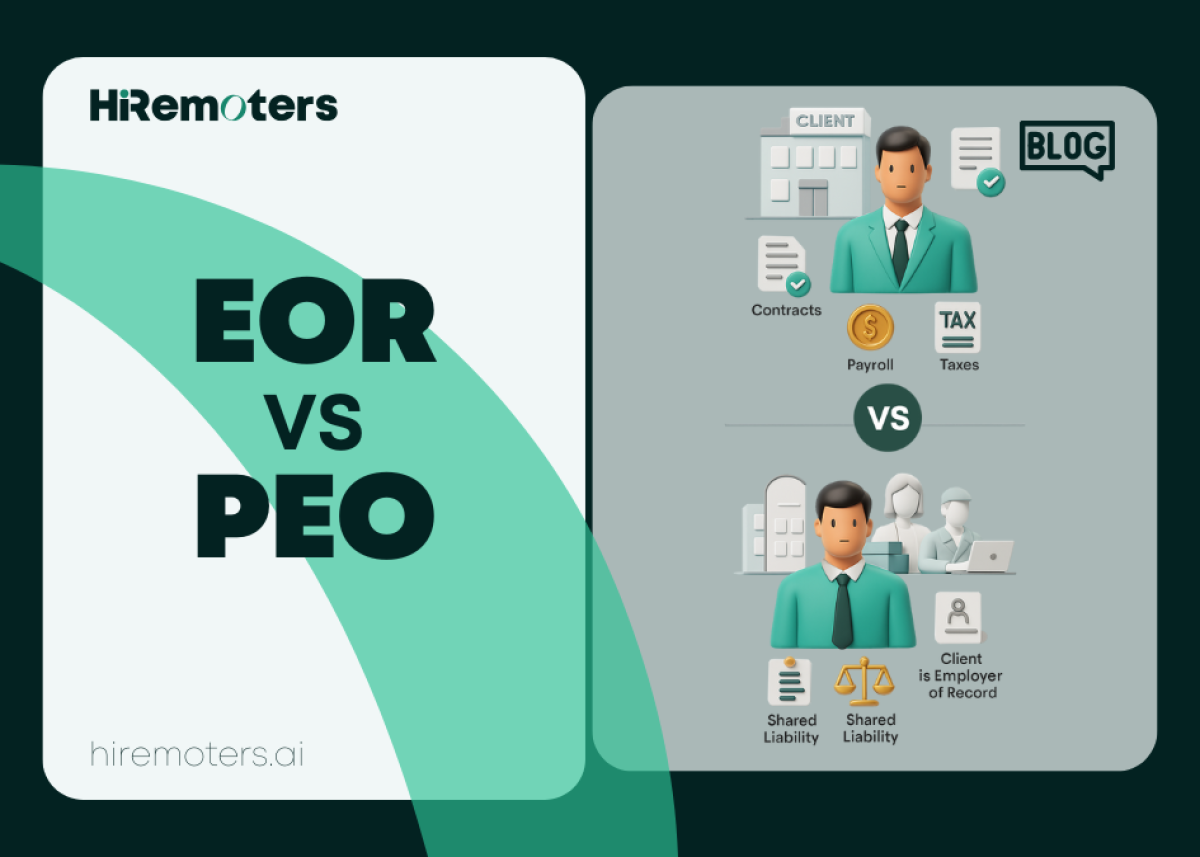
EOR vs PEO
When expanding your business internationally or managing a remote workforce, you may come across terms like EOR (Employer of Record) and PEO (Professional Employer Organization). Both offer valuable solutions for global hiring and HR management, but they serve different purposes and operate in distinct ways.In this article, we will break down the key differences between EOR vs PEO, helping you decide which is best for your company's needs. Whether you’re exploring global employment solutions, international workforce management, or simply want to understand what EOR and PEO, this guide will provide clear answers.What is an Employer of Record (EOR)?An Employer of Record (EOR) is a service that legally employs workers on behalf of your company in another country. The EOR handles all compliance, payroll, taxes, and labor law requirements, allowing your business to hire employees abroad without setting up a local legal entity.Key Features of EOR Services:Legal employment: The EOR is the official employer of your workers.Compliance management: Ensures local labor laws, tax regulations, and benefits are handled correctly.Payroll and taxes: Manages salary payments, tax deductions, and social security contributions.Onboarding and offboarding: Takes care of hiring, contracts, and termination procedures.Global hiring made easy: Allows businesses to hire anywhere without registering a local branch.Many companies use an EOR to quickly access international talent and streamline their remote workforce management while staying compliant with local regulations.What is a Professional Employer Organization (PEO)?A Professional Employer Organization (PEO) is a service that co-employs workers alongside your company, primarily in your home country. The PEO manages HR functions such as payroll, benefits, workers’ compensation, and compliance, while you maintain operational control over your employees.Key Features of PEO Services:Co-employment model: PEO and your company share employer responsibilities.HR administration: Handles payroll, benefits administration, and risk management.Compliance support: Helps you navigate employment laws and workplace regulations.Employee benefits: Offers access to group health insurance and retirement plans.Workforce management: Focuses on domestic employment and employee support.PEOs are ideal for small to medium businesses looking to outsource HR functions domestically, improve employee benefits, and reduce administrative burdens.EOR vs PEO: What Are the Main Differences?Understanding the differences between EOR and PEO is crucial for selecting the right partner for your business. Here’s a side-by-side comparison:AspectEmployer of Record (EOR)Professional Employer Organization (PEO)Employment ModelActs as the legal employer of your international workersCo-employment with your company; shared employer statusGeographic ScopePrimarily for global/international hiringMainly domestic/local workforce managementLegal EntityNo need for your company to set up a legal entity abroadRequires company’s legal entity in the countryCompliance ResponsibilityFully manages compliance with local laws and regulationsHelps with compliance but employer responsibilities sharedPayroll & TaxHandles full payroll, taxes, and benefitsManages payroll and benefits for domestic employeesEmployee BenefitsProvides local benefits and statutory requirementsOffers employee benefits such as insurance and retirementBest ForCompanies expanding globally without local setupBusinesses outsourcing HR tasks domesticallyWhen to Use an EOR?Using an EOR is an excellent choice if your company:Wants to hire employees in foreign countries quickly without establishing a legal presence.Needs to ensure full legal compliance with local labor laws and tax regulations.Is testing a new international market and wants to avoid the risks and costs of a local entity.Prefers an all-in-one solution that covers onboarding, payroll, benefits, and compliance.Needs to hire remote workers across multiple countries with minimal setup.Example Use Cases for EOR:A U.S.-based tech startup is hiring software engineers in Germany, Brazil, and Japan.A multinational company onboarding sales reps in new international markets.A business expanding operations into countries with complex employment laws.When to Use a PEO?A PEO is a better fit when your company:Operates primarily in one country and wants to outsource HR administration domestically.Seeks to offer competitive employee benefits like health insurance, 401(k), and workers’ comp.Wants to reduce administrative overhead by outsourcing payroll, tax filing, and compliance.Is looking for expert guidance on local employment regulations.Wishes to improve employee satisfaction with professional HR support.Example Use Cases for PEO:A small business in the U.S. needing payroll, benefits, and HR management.A growing company that wants to access group health insurance plans.A firm wanting to reduce risks related to employment law compliance.EOR vs PEO: Cost Comparison and Contract TermsCosts and contract terms vary widely between EOR and PEO providers, depending on the services offered and locations covered.EOR Cost Structure:Typically charges a percentage of each employee’s salary (commonly 10%-20%).May include setup fees or monthly minimums.Costs reflect the added complexity of international compliance.PEO Cost Structure:Often charges a flat fee per employee or a percentage of total payroll (about 2%-12%).Pricing depends on services like benefits administration and risk management.Generally, it is more cost-effective for domestic HR outsourcing.When comparing providers, consider:The scope of services included (payroll, benefits, compliance).The countries covered if using EOR for global hiring.The flexibility of contracts (length, termination clauses).The quality of customer support and technology platforms.How to Choose Between EOR and PEO?To select the right option for your business, answer these questions:Where are your employees located?If international, EOR is usually necessary.If domestic, a PEO is often sufficient.Do you have or want a legal entity in the employee’s country?Without a local entity, an EOR provides a legal hiring solution.With a local entity, a PEO can co-employ your staff.What level of compliance support do you need?For full compliance outsourcing, EOR is ideal.For shared compliance responsibility, a PEO fits.What’s your budget and HR complexity?EOR can be costlier but offers end-to-end solutions abroad.PEOs are typically more affordable for domestic HR functions.Are you expanding into multiple countries or just managing a local team?Use EOR for global, multi-country hiring.Use PEO for domestic workforce management.Advantages and Disadvantages of EOR and PEOPros of EOR:Enables fast global hiring without legal entity setup.Ensures full compliance with complex international laws.Simplifies payroll and benefits management globally.Reduces legal risk related to employment.Cons of EOR:Can be more expensive than PEOs.Less direct control over employee contracts.Limited customization in some regions.Pros of PEO:Offers cost-effective HR outsourcing domestically.Provides access to group employee benefits.Helps companies stay compliant with local regulations.Improves employee experience with HR support.Cons of PEO:Limited to countries where your company has legal presence.Shared employment responsibilities can be complex.Less suited for global expansion.Common Misconceptions About EOR and PEOMisconception 1: EOR and PEO are the same. They serve different markets and employment models. EOR focuses on international hiring, while PEOs serve domestic HR needs.Misconception 2: EOR means losing control over employees. The client company retains day-to-day management; the EOR handles administrative and legal aspects.Misconception 3: PEOs only handle payroll. PEOs provide a full range of HR services, including compliance, benefits, risk management, and employee support.Final Thoughts on EOR vs PEOChoosing between an Employer of Record (EOR) and a Professional Employer Organization (PEO) depends largely on your business’s location needs, compliance requirements, and budget. For international expansion and hiring without legal entities abroad, EOR is the practical solution. For domestic HR outsourcing, PEOs offer cost-efficient, comprehensive services.Investing time to understand the nuances of EOR vs PEO will save your company from costly legal mistakes and help streamline workforce management, whether local or global.
Hiring Tech Talent in MEA: A 2025 Playbook for Startups
The MEA Tech Rush: Why Everyone’s Hiring (and Struggling)If you’ve tried to hire tech talent in MEA recently, you’ve probably felt it that mix of excitement and frustration.There’s incredible talent out there, from full-stack developers in Cairo to data scientists in Nairobi, but finding the right people (and convincing them to join your team) feels tougher than ever.Startups across the Middle East and Africa are scaling fast, fueled by investment, innovation, and ambition. Yet, the biggest bottleneck isn’t funding or customers, it’s people.In 2025, hiring isn’t about filling roles. It’s about building teams that believe in your mission, align with your pace, and grow with you. This playbook breaks down how to do just that with practical, no-fluff advice on what’s really working for startups across MEA.The MEA Talent Landscape: What You’re Up AgainstBefore diving into job posts and interviews, it’s worth understanding the ground you’re standing on.A Region on the RiseTech ecosystems in MEA have exploded over the past few years. Cairo, Riyadh, Lagos, Dubai, and Nairobi are buzzing with new startups and coding bootcamps. Universities are producing more graduates, and remote work has opened global doors.But the challenge? Competition. Developers in Egypt or Kenya are now being recruited by companies in London or Berlin — and they’re taking those offers.So the game isn’t just local anymore. You’re competing on a global stage.What Developers Actually Want in 2025Here’s the thing: great engineers have options. Lots of them.When choosing where to work, they look for:Flexibility — remote or hybrid, not 9-to-5 in a cubicle.Growth — clear learning paths and mentorship.Purpose — a sense that what they build matters.Transparency — honest pay ranges and clear communication.If your offer doesn’t tick at least three of these boxes, someone else’s will.The 2025 Playbook: How to Hire Tech Talent in MEALet’s get tactical. Here’s a step-by-step look at what works.1. Get Crystal Clear on Who You’re HiringThis sounds obvious, but most hiring mistakes start with a fuzzy job description.Take the time to define:What your product actually needs (e.g., backend developer with Django, not just “tech wizard”).The seniority level (junior vs. senior makes a huge difference).Whether you’re open to remote or want someone local.Which soft skills matter — problem-solving, communication, collaboration.A focused job post helps attract people who fit your stage and culture. “Looking for an ambitious backend engineer to join a fast-moving SaaS startup” beats “we need someone who knows Python.”2. Mix Up Your Hiring ChannelsStop relying on LinkedIn alone. The best candidates might never apply there.Here’s where to look instead:ChannelWhy It Works in MEAHow to Use It SmartlyLocal job boardsReach homegrown talentLocalize your ad (e.g., mention benefits in local currency)University partnershipsFresh graduates ready to learnRun hackathons or workshops for early exposureDeveloper communitiesDeep, engaged talent poolsSponsor local meetups or online coding challengesRemote hiring platformsExpand beyond bordersScreen for reliability and culture fitRecruiters with MEA expertiseFor hard-to-fill rolesChoose recruiters who understand startup culture, not just CVsIf you’re serious about hiring, meet developers where they already are — in WhatsApp groups, Telegram communities, and tech hubs.3. Make the Interview Process HumanNo one wants to do five rounds of robotic interviews.To hire well (and fast):Keep the process short: one technical test + one cultural interview.Replace algorithm puzzles with real-world tasks that reflect your work.Always give feedback — even to those you don’t hire.A simple message like “We went with someone else, but you did great on the technical test” can leave a lasting impression. That’s how you build a reputation as a company people want to apply to.4. Move Fast When You Find the OneIf you find a great candidate, don’t wait. The best ones get offers within days.Send a clear, personalized offer — not a generic HR template. Explain why you think they’ll make a difference, outline next steps, and start onboarding immediately.And speaking of onboarding — make it warm, not bureaucratic. A thoughtful first week with real introductions and small wins does more than any “Welcome Kit.”Best Practices for Hiring Developers in Africa and the Middle East (2025 Edition)Be Local, Even if You’re RemoteThe MEA region isn’t one monolithic market. A job offer that works in Dubai might not land in Cairo or Lagos.Adapt to local context:Use local currency when sharing salary ranges.Highlight benefits that matter (internet stipends, flexible hours, training budgets).Speak in the language of opportunity, not corporate jargon.Tell Your Story WellYour brand matters more than you think. Developers want to work where they believe in the mission.Here’s how to build that pull:Share behind-the-scenes stories of your product and people.Celebrate milestones publicly.Encourage your engineers to post about their work.When candidates see your team sharing authentically, it feels real. And real beats perfect every single time.Invest in Growth — It Pays OffMEA startups often can’t compete with Silicon Valley salaries. But they can compete with purpose and learning.Offer learning stipends or sponsor certifications.Give engineers ownership of projects.Provide mentorship — internal or external.If you build a culture where people grow, they’ll stay — even when recruiters come calling with higher paychecks.Remote Tech Hiring in MEA: The Double-Edged SwordThe Bright SideRemote work has changed everything. You can now hire a brilliant data scientist in Accra or a Flutter developer in Tunis without ever meeting in person.It’s opened the door to diverse, distributed teams across the region — and beyond.The ChallengesOf course, it’s not all smooth sailing:Time zone coordination can get messy.Legal and payroll setups across countries are tricky.And culture building is harder without shared office energy.The FixSet clear overlap hours (2–3 hours daily is enough).Partner with Employer of Record (EOR) platforms to handle contracts and payments.Build culture intentionally — weekly check-ins, all-hands meetings, even online trivia nights.Remote isn’t harder. It just takes more empathy.The Real Obstacles: What’s Holding MEA Startups Back1. Competing with Global SalariesDevelopers in MEA are getting international offers — and it’s tough to match those numbers.Your edge: sell your mission and impact. Offer growth, equity, and flexibility instead of just chasing the highest bidder.2. Skill GapsSome graduates have strong theory but lack hands-on experience.Your move: build bridges — short bootcamps, mentorships, or internships. You’ll grow your own future hires.3. RetentionLosing your best people hurts more than hiring slow.Your fix:Keep the work exciting.Recognize effort.Give people room to make decisions and learn.Retention isn’t about perks — it’s about trust.The TechRoots Example: Hiring That Actually WorkedLet’s talk about TechRoots, a real startup success story.They were building a fintech product in Cairo and needed a solid backend team fast. Instead of hiring blindly, they launched a regional hackathon open to developers from Egypt, Kenya, and Nigeria.Winners got mentorship sessions and job offers. They used an EOR service to onboard talent legally across countries and built an onboarding plan around real projects — not PowerPoints.Result? They hired five engineers in eight weeks. One year later, all five were still there.Their secret wasn’t budget — it was care, speed, and clarity.Your Quick 2025 MEA Hiring Checklist Clear, localized job descriptions Multiple sourcing channels (not just LinkedIn) Short, relevant assessments Transparent offers and fast decisions Legal payroll setup or EOR support Structured onboarding Continuous learning culture Strong employer storytellingNail these, and you’re already ahead of 90% of startups.The Bottom Line: Build People, Not Just ProductsHiring tech talent in MEA in 2025 isn’t a formula; it’s a mindset.It’s about treating people as partners in your mission, not just “resources.” It’s about building workplaces where engineers don’t just code, they care.So, move fast, stay human, and remember: The best hiring strategy isn’t about finding the best talent — it’s about becoming the kind of company they want to join.
Remote Work Compliance Laws in Egypt and UAE
Remote work is now a normal way of working across the region. If your teams are in Egypt or the UAE, your work-from-home policy should align with Egyptian labor law, UAE labor law, WPS payroll, PDPL data protection, and (where relevant) DIFC and ADGM rules. This practical guide walks through the essentials of remote work compliance, with simple checklists and examples you can apply today.What “remote work” means in both countriesEgypt: remote work is being formalizedEgypt’s labor framework covers the basics—working hours, rest, and health & safety—and increasingly recognizes remote and flexible setups. In practice, treat remote work like any employment arrangement: capture it in writing, define where work happens, how hours are tracked, and who provides equipment. For distributed teams across governorates, keep the policy consistent and easy to follow.UAE: several work models + a remote work visaThe UAE recognizes multiple work models (full-time, part-time, flexible, remote). On the mainland, you follow federal law and MOHRE guidance; in free zones like DIFC and ADGM, you apply their employment regimes. Dubai also offers a one-year Virtual Work (remote work) Visa for foreign professionals employed outside the UAE.Working hours, overtime, and restEgyptA common baseline is 8 hours per day / 48 hours per week (excluding breaks), plus at least one weekly rest day. Remote staff remain employees, so overtime should be approved in advance and logged. Simple timekeeping tools help—bonus points if they include “break start/stop” buttons.Quick tipsDocument regular hours and how overtime is requested/approved.Keep a shared calendar for shifts and on-call time.Remind teams to take real breaks at home.UAE (mainland & free zones)On the mainland, weekly hours generally cap at 48, with rest and overtime rules. Free zones (DIFC, ADGM) have their own caps, leave rules, and notice periods. Remote does not mean “always on”—set availability windows and hold the line.Quick tipsPut core hours and response expectations in the contract/policy.For cross-border squads, show meeting windows in both time zones.Rotate late-day standups so the same people aren’t always staying late.Contracts & policies: write the essentialsEgypt (good practice)Add a Remote Work Addendum: approved location(s), schedule, responsiveness, KPIs, and time recording.Define equipment and expense rules (internet, electricity, ergonomic chair/monitor).Reference OHS: safe desk setup, lighting, breaks, incident reporting.Include confidentiality and data handling for home networks and personal devices.UAE (mainland/free zone)Choose the correct work model (remote/flexible/part-time) on the MOHRE or free-zone template.Clarify expense reimbursement and equipment issuance.If someone works from outside the UAE, define the arrangement (foreign employee, contractor, EOR) and which jurisdiction applies.Pay & payroll complianceEgypt: social insurance applies to remote staffRegister employees properly and pay social insurance contributions on eligible wages—even when they work from home. Keep payroll files tidy: contracts, salary components, allowances, and any overtime approvals. If you offer a remote stipend, record the what/why/when.UAE: WPS on the mainlandMainland employers must pay salaries via the Wages Protection System (WPS) to approved financial institutions. Remote employees are no exception—if they’re your MOHRE-registered staff, they should be paid through WPS and on time. If a person lives in the UAE on the Virtual Work Visa while employed by a non-UAE company, WPS doesn’t apply because it’s not an MOHRE employment.Immigration & cross-border setupsUAE Virtual Work (Remote Work) Visa: Lets foreign professionals live in the UAE for one year while working for an employer abroad. It’s residency, not a UAE employment contract; payroll stays offshore unless you hire locally.Egypt: No dedicated digital-nomad route. Use standard work/residency options and follow tax rules for any foreign nationals you engage.Human tip: Map each case on one page—where the person lives, who employs them, where payroll runs, and which tax/social regimes apply.Data protection & cybersecurity (PDPL in both countries)Both countries have PDPL frameworks that expect you to protect personal data, explain what you’re doing with it, and secure it. Remote teams add extra risk: home Wi-Fi, shared spaces, and personal devices.Good controls that are easy to roll outMDM + full-disk encryption on company laptops.VPN and DLP (data loss prevention) for sensitive roles.Clear Acceptable Use Policy (no public Wi-Fi for confidential work; lock screens; avoid printing).A maintained vendor list showing where data lives (HRIS, payroll, help desk, cloud storage).Short privacy training with realistic scenarios (e.g., “My child uses this laptop—what should I do?”).Health & safety at home (yes, still your job)Employers remain responsible for basic OHS even when employees work from home.Make it practicalShare a one-pager on ergonomics (chair height, monitor distance, 20-20-20 rule).Offer a small setup stipend (chair, footrest, extra monitor).Provide a home-incident report form and explain when to use it.Encourage regular movement breaks—calendar nudges help.Quick compliance checklist (copy/paste)EgyptContracts include a Remote Work Addendum (location, hours, KPIs, time tracking).Overtime is pre-approved and recorded.Social insurance registration and contributions are up to date.Privacy notice covers remote tools and any cross-border transfers.OHS guidance shared; incident reporting works for home setups.UAE (mainland / free zone)Correct work model selected (remote/flexible/part-time).WPS salary file runs cleanly and on time each month (mainland).If in DIFC/ADGM, check the zone’s employment code and data rules.Remote expense and equipment policy is clear.Privacy notice and PDPL practices updated for remote tools.FAQs (in plain language)Can we pay a UAE-based remote employee outside WPS?If they’re a mainland employee under MOHRE, no—use WPS. If they’re in the UAE on the Virtual Work Visa working for a non-UAE employer, WPS doesn’t apply.Do we need to rewrite Egypt contracts for remote work?It’s smart to. Put the arrangement in writing: hours, location, equipment, data rules, and OHS. It prevents confusion later.How do free zones change things?Free zones like DIFC and ADGM have their own employment rules. Always check the zone code before mirroring mainland policies.Who pays for the chair and internet?Decide up front. Many employers cover part of the internet bill and provide basic ergonomic gear. Write the rules; apply them consistently.Practical examples to implement this weekEgypt: Add a signed Remote Work Addendum for each remote employee. Specify approved work location(s), daily hours, how to request overtime, and the tools you’ll use (time tracker, VPN, IT ticketing).UAE: In your HR system, tag employees as remote or flexible and connect that tag to your WPS payroll workflow so nobody is missed on pay day.Both: Publish a lightweight Data & Devices guide (max 5 pages) with screenshots: how to use the VPN, how to lock a laptop, and what to do if a device is lost.Conclusion: keep it simple, keep it legalIf you remember just three things about remote work in Egypt and the UAE, remember this:Put the arrangement in writing (contract + policy).Pay people correctly and on time (WPS where required; social insurance where applicable).Protect people and data (PDPL, OHS, and everyday IT hygiene).
Why Remote Tech Talent in North Africa is the Future of Work
If you’re growing a product and watching burn at the same time, remote tech talent from North Africa might be the smartest move you make this year. The region fits the future of work: remote hiring, distributed teams, tech outsourcing, and cost-effective talent without sacrificing quality. Thanks to time-zone overlap with Europe and the Gulf, strong engineering pipelines across Egypt, Morocco, and Tunisia, and multilingual developers who integrate smoothly into global squads, North Africa is fast becoming a strategic hiring destination.Why North Africa? Clear Wins for Remote HiringTime-zone alignmentNorth Africa works almost shoulder-to-shoulder with Europe and the GCC. That means:Real-time feedback loops with product and designSame-day code reviews and releasesFewer after-hours meetings for globally distributed teamsDeep, diverse talent poolsYou’re not just chasing lower rates—you’re getting impressive quality per dollar.Egypt offers a large pipeline, strong English proficiency, and standout AI/ML, data, and backend talent.Morocco and Tunisia provide excellent francophone developers, ideal for companies serving French markets.A lively culture of meetups, bootcamps, and hackathons keeps skills current and practical.Language and culture fitBetween Arabic, French, and English, teams adapt quickly to global documentation standards, agile rituals, and clean handoffs. Expect comfort with PR etiquette, code reviews, and modern engineering workflows.A cost-quality balance that scalesRates are competitive, but the real story is senior-level execution at a price that lets you build resilient remote teams rather than one-hero squads. That translates into faster shipping, more reliable ownership, and healthier roadmaps.Where North African Engineers ShineProduct engineering end-to-endBackend & APIs: Node.js, Python/Django, Java/Spring BootFrontend: React, Vue, AngularMobile: Flutter, React Native, Kotlin/SwiftCloud & DevOps: Docker, Kubernetes, IaC, CI/CD on AWS, GCP, AzureData, AI/ML, and analyticsData engineering (ETL/ELT, warehousing)MLOps pipelines with observabilityNLP and recommendation systemsBI dashboards that translate into decisionsCybersecurity and QAApplication security, cloud hardening, and threat modelingAutomated test suites, performance testing, and reliability engineeringWorkflows suitable for regulated industriesHow to Hire—Without the HeadachesStep 1: Source where the talent isLook beyond generic job boards. Tap regional Slack/Discord communities, university networks, and developer groups. Use LinkedIn filters for Egypt, Morocco, and Tunisia, and shortlist via GitHub and Stack Overflow. If you’re in a hurry, work with MENA-focused partners who maintain vetted pipelines.Step 2: Screen for collaboration, not just syntaxFavor tiny, realistic exercises over marathon take-homes. Add a short pairing session to see how candidates communicate and approach trade-offs. Ask for a concise design note or ADR-style write-up to gauge async readiness and clarity.Step 3: Make fair, transparent offersShare salary bands or engagement rates early. Offer remote-friendly benefits that actually help: learning budgets, internet stipends, and coworking passes. Benchmark locally—seniority bands differ by city and specialization.Step 4: Onboard like you ship featuresUse a clear onboarding checklist (devices, access, repos, runbooks). Publish a “How we build” page: PR style, testing expectations, release cadence, definition of done. Pair each new hire with a buddy for the first 30–60 days.Contracts, Payroll, and ComplianceYou have three straightforward paths:Independent contractors for fast starts and project-based engagements. Ensure IP assignment, confidentiality, and data protection are explicit.Employer of Record (EOR) if you want compliant, employment-like relationships without opening a local entity.Local entity if you’re building a hub and want full control over HR and operations.For payments, choose reputable cross-border providers, pay in USD/EUR or local currency, and set predictable monthly cycles with clear SLAs. Keep tidy records for audits and filings in your home country. A short, plain-English “How we work together” document alongside a formal contract eliminates ambiguity on day one.Running Distributed Teams Across Time ZonesAsync by default, sync with purposeLean into RFCs, decision logs, and lightweight ADRs. Schedule weekly planning, sprint reviews, and occasional standups with clear agendas. Protect a 2–3 hour window that overlaps EU/GCC and North Africa for high-bandwidth collaboration.Tools that keep momentumDev: GitHub/GitLab, CI/CD, feature flagsDocs: Notion/Confluence templates for specs, retros, and runbooksPM: Linear/Jira as your single source of truthComms: Slack/Teams with channels mapped to your product surface areaSecurity you won’t regretEnable SSO and MFA everywhere. Use role-based access with least-privilege defaults. Run quarterly access reviews, maintain a simple incident playbook, and keep backups verified.Two Real-World ScenariosA Berlin SaaS shipping fasterA small platform team needs more React + Node capacity, quickly. They hire remote developers in Egypt and add backend developers in Tunisia for API throughput. Because of time-zone alignment, a design comment at 10:00 CET turns into a working build by late afternoon. Release velocity climbs within weeks.A Riyadh fintech under compliance pressureThe company spins up a data engineering and DevOps pod in Morocco. Francophone developers handle analytics for a French partner bank; English-speaking developers connect to the core platform. An EOR manages compliance and payroll so the CTO focuses on audits and uptime, not paperwork.Common Challenges—and Practical FixesConnectivity hiccups: Offer internet stipends and coworking passes. Keep CI/CD robust and support offline-first coding.Scope creep: Time-box sprints, enforce a clear definition of done, and keep product specs crisp.Cultural misreads: Run short sessions on feedback norms. Rotate demo leads so every voice is heard.Retention: Invest in learning budgets, architecture ownership, and transparent growth paths.Payment friction: Standardize payout dates, use reliable rails, and share payment proofs automatically.Your 10-Step Quick StartDefine roles, seniority, and must-have vs nice-to-have skills.Choose your engagement model: contractor, EOR, or local entity.Publish a predictable hiring pack (process, assessments, compensation bands).Shortlist markets: Egypt for scale and English; Morocco/Tunisia for French and strong backend/data talent.Source via communities, platforms, and trusted regional partners.Run practical, time-boxed assessments and a short pairing session.Draft contracts that cover IP, confidentiality, data, and clean termination clauses.Prepare onboarding: access, repos, runbooks, CI, and living documentation.Set team rituals: planning, async design docs, and demo days.Review at 30/60/90 days and iterate your playbook.Quick FAQsIs North Africa a good fit for early-stage startups? Yes. The cost-quality ratio and time-zone alignment make it ideal for fast iteration and tight feedback loops.What about language barriers? You’ll find both English-speaking and francophone developers. Choose based on your user base and markets.How should we handle payroll? For a few hires, start with contractors via reputable cross-border providers. As you scale, consider an EOR for compliance and benefits.How do we protect IP? Bake IP assignment and confidentiality into contracts. Enforce role-based access across repos and cloud resources.Conclusion: Put North Africa on Your RoadmapIf the future of work is global, distributed, and high-trust, North Africa checks every box: real-time collaboration with Europe and the Gulf, serious engineering depth, and cost-effective talent that scales with you. Whether you hire remote developers in Egypt, build a remote engineering team in Morocco, or tap backend developers in Tunisia, you’ll get the velocity and quality modern product teams need.